

Sweeten Your Scraps: How to Candy Orange Peels Like a Pro
From Food Waste to Jewel-Like Treats: The Art of Candying Orange Peels
Learning how to candy orange peels is simpler than you might think — and the results are stunning.
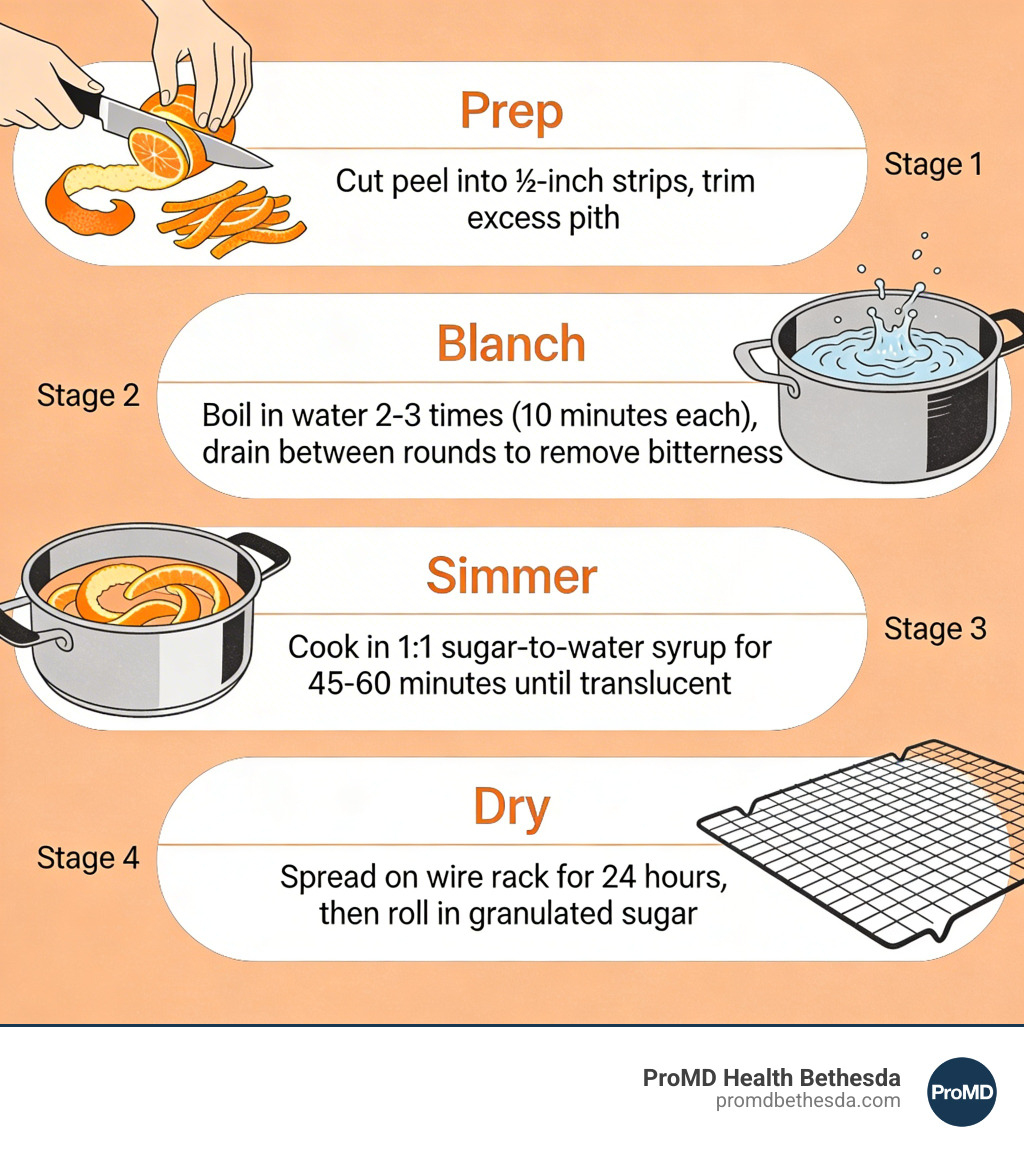
Quick Answer: How to Candy Orange Peels
- Prep — Cut peel into ¼-inch strips, trimming excess pith
- Blanch — Boil peels in water 2-3 times (10 minutes each), draining between each round to remove bitterness
- Simmer — Cook peels in a 1:1 sugar-to-water syrup for 45-60 minutes until translucent
- Dry — Spread on a wire rack for 24 hours, then roll in granulated sugar
That’s it. Two main ingredients. Four steps. The result? Glossy, chewy, citrus-sweet candies that look like they came from a fancy French bakery.
The technique has been around for centuries — originally as a food preservation method before refrigeration existed. It stuck around because the results are genuinely delightful. What would otherwise be kitchen scraps become sparkling, jewel-like treats perfect for snacking, gifting, or garnishing your favorite desserts and cocktails.
Whether you’re making a batch for holiday gifts or just hate wasting good citrus, this guide walks you through everything you need to know.
Essential Ingredients and Preparation
Before we dive into the boiling pots, let’s talk about our starting materials. While the ingredient list is short, the quality of your citrus makes a massive difference. At ProMD Health Bethesda, we often discuss the importance of what you put in and on your body, and that philosophy extends to the kitchen.
Choosing Your Oranges
Most experts agree that Navel oranges are the gold standard for candying. They have a thick, sturdy skin that is easy to peel and holds its shape during the long simmering process. Valencia oranges are another great choice, particularly if you’re making these during their peak season.
We highly recommend using organic citrus. Since we are consuming the outermost layer of the fruit—the part most exposed to agricultural sprays—choosing organic helps you avoid the pesticides and fungicides often found on conventional citrus. If you can’t find organic, give your fruit a very thorough scrub with a vegetable brush and some warm, soapy water.
The Power of the Peel
It’s easy to think of the peel as just a wrapper, but it’s actually a nutritional powerhouse. Scientific research on citrus peel nutrients shows that the peel contains a higher concentration of certain flavonoids and phytonutrients than the juice or pulp itself. By learning how to candy orange peels, you’re essentially turning a nutrient-dense “scrap” into a gourmet snack.
Preparing the Strips
- Wash and Dry: Start with clean, dry fruit.
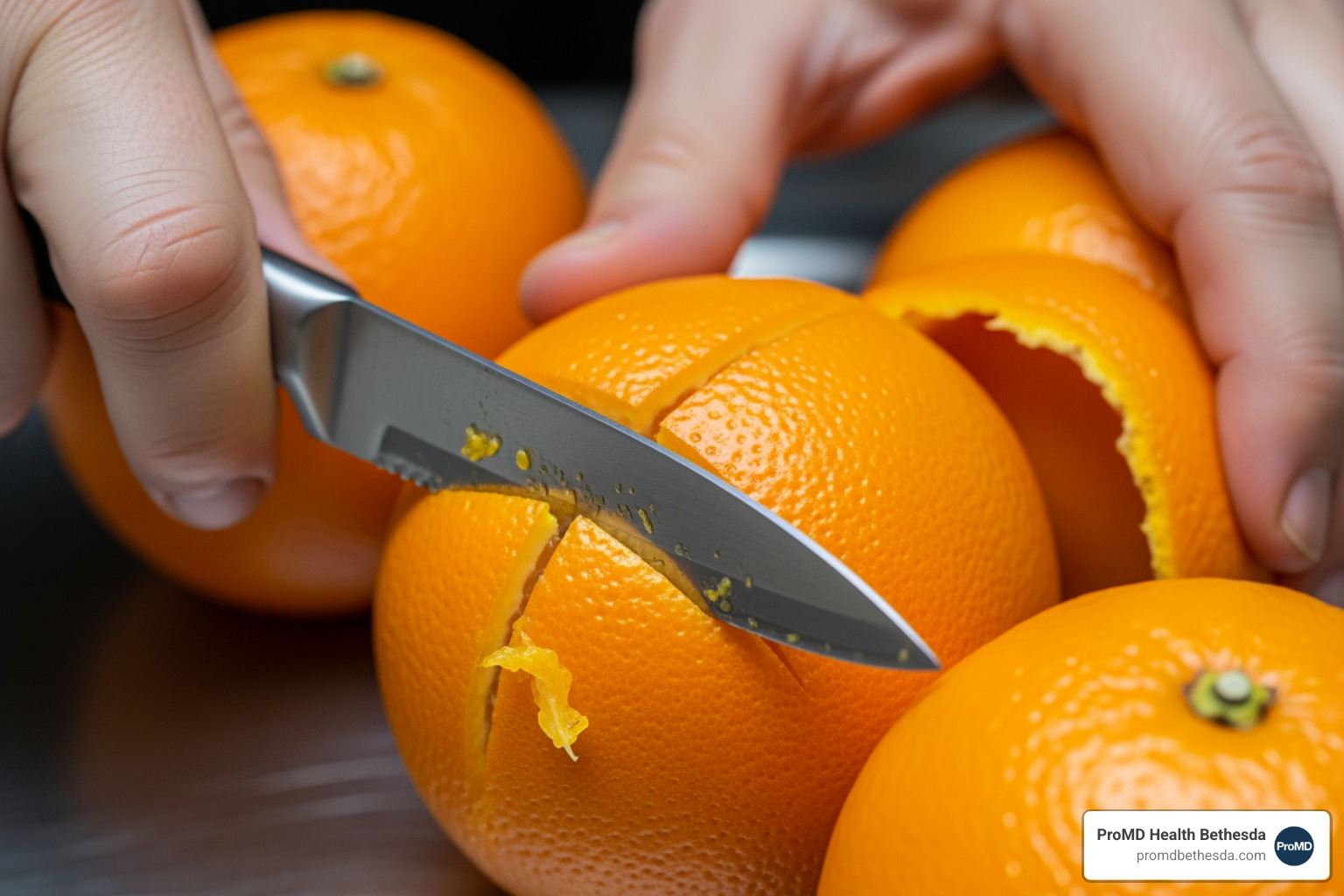
- Score the Skin: Use a sharp paring knife to cut off the top and bottom of the orange. Score the skin from top to bottom in four or six even segments, being careful not to cut too deeply into the fruit.
- Peel: Use your fingers or a spoon to gently pry the peel away from the flesh.
- Trim the Pith: This is where opinions vary. Some recipes suggest scraping every bit of white pith away, while others suggest leaving about 1/8-inch. We find that leaving a thin layer of pith provides a better, “gummy-bear” like texture. If the pith is exceptionally thick (common in some Navels), use your knife to carefully plane it down to a consistent thickness.
- Slice: Cut the peels into uniform strips, roughly 1/4-inch wide. Uniformity is key here; it ensures every piece cooks at the same rate.
How to Candy Orange Peels: The Essential Step-by-Step Guide
Now that your strips are ready, it’s time to transform them. The process is a marathon, not a sprint, but the active work is actually quite minimal.
The Blanching Phase: Banishing the Bitterness
If you’ve ever bitten into a raw orange peel, you know it’s bitter. This bitterness lives primarily in the white pith. To make the peels palatable, we must blanch them.
Place your peel strips in a pot and cover them with cold water. Bring the water to a boil and let it roll for about 10 minutes. Drain the water and repeat the process. Most recipes call for at least two rounds of blanching, but if you’re using grapefruit or particularly bitter oranges, a third round might be necessary. This process softens the cell walls of the peel, allowing the sugar syrup to penetrate later.
The Syrup Stage
Once blanched, it’s time for the “candying” to actually happen.
- The Ratio: The most common ratio is 1:1—one part sugar to one part water. For 3 large oranges, we typically use 2 cups of granulated sugar and 2 cups of water.
- The Pot: Use a wide saucepan with relatively tall sides. A wider pot allows for better evaporation, while tall sides prevent the bubbling sugar from splattering all over your stovetop (a sticky mess we’d all like to avoid!).
- The Setup: Dissolve the sugar in the water over medium heat, then add your blanched peels.
Mastering the Simmer: How to Candy Orange Peels to Perfection
This is where the magic happens. Turn the heat down to low. You want a very gentle simmer—just a few bubbles breaking the surface.
How long do you simmer? Usually between 45 and 60 minutes. You aren’t looking at a clock as much as you are looking for visual cues. You want the peels to become translucent. The white pith should look almost clear or like stained glass.
If you are a fan of precision, you can use a candy thermometer. You are looking for the “soft ball stage,” which is roughly 235°F to 240°F. Some chefs, like Alton Brown, prefer taking the syrup up to 250°F for a crunchier result, but for a classic chewy peel, 235°F is your sweet spot.
The Spatula Grit Test: If you don’t have a thermometer, swipe a spatula across the bottom of the pan. If you feel a slight “grit” or resistance from the concentrated syrup, you’re likely done.
Pro Tips for How to Candy Orange Peels Without Bitterness
The most common complaint from beginners is that their peels are still too bitter. Here is how we ensure success every time:
- Don’t Rush the Blanch: It’s tempting to skip the second or third boil, but don’t. Each cycle draws out more of those bitter compounds.
- Taste Test: After the second blanch, take a tiny bite of a peel. It should be soft and only mildly bitter. If it’s still overwhelming, go for a third round.
- The Ice Bath: Some pros like to plunge the peels into an ice water bath between blanching cycles. This helps keep the peel’s structure intact so they don’t become mushy.
- Navel vs. Grapefruit: Grapefruit peels have significantly more pith and bitterness. They almost always require three or four blanching cycles, whereas a Navel might only need one or two.
Once cooked, use a fork or a slotted spoon to transfer the peels to a Wire rack for cooling.
Drying, Coating, and Long-Term Storage
Patience is the final ingredient in learning how to candy orange peels. Once they come out of the syrup, they are incredibly sticky.
The Drying Game
Spread the peels out in a single layer on a wire rack set over a piece of parchment paper (to catch the drips). Let them sit at room temperature for at least 24 hours. In humid climates—like a typical summer day in Bethesda or Rockville—you might need up to 48 hours. They should feel tacky but not wet.
To Sugar or Not to Sugar?
Once the peels have dried slightly, you can roll them in extra sugar.
- Granulated Sugar: The classic choice for a sparkly finish.
- Superfine or Sanding Sugar: Gives a more professional, “jewel-like” appearance.
- No Sugar: If you plan on dipping them in chocolate or using them exclusively for baking, you can skip the sugar coating. Just be aware they will remain quite sticky.
Storage Solutions
How long do these treats last? If prepared and dried correctly, they have a surprisingly long shelf life.
| Storage Method | Shelf Life | Best For |
|---|---|---|
| Airtight Container (Pantry) | 1 – 2 Months | Daily snacking and garnishes |
| Refrigerator | 2 – 3 Months | Humid environments |
| Freezer | 6+ Months | Long-term prep and holiday gifts |
Pro Tip: If you live in a particularly humid area, toss a food-grade silica desiccant packet into your storage jar to keep the sugar from melting and becoming sticky again.
Creative Ways to Use Your Candied Citrus
Once you’ve mastered how to candy orange peels, you’ll find they are one of the most versatile items in your pantry.
The Chocolate-Dipped “Orangette”
This is the ultimate way to enjoy your hard work. Melt some high-quality dark chocolate and dip the dried (unsugared) peels halfway. Let them set on parchment paper. These are a staple in high-end French confectioneries and make incredible gifts for friends and family in Chevy Chase or Kensington.
Baking and Cooking
- Holiday Breads: Chopped candied peel is an essential ingredient in traditional Panettone, Stollen, and British fruitcakes.
- Morning Treats: Fold them into scone dough or muffin batter for a bright citrus punch.
- Cheese Boards: They pair beautifully with sharp cheddars or creamy goat cheeses.
The “Liquid Gold” Byproduct
Don’t you dare pour that leftover syrup down the drain! That liquid is now a potent, orange-infused simple syrup.
- Cocktails: Use it in an Old Fashioned, an Aperol Spritz, or a Cosmopolitan.
- Tea and Coffee: A spoonful in iced tea or a latte is transformative.
- Cakes: Brush it over warm cake layers to add moisture and flavor.
For more visual inspiration on how to style these beauties, check out the Preppy Kitchen Instagram inspiration for some truly “sparkling” ideas.
Frequently Asked Questions about Candying Peels
Why are my candied orange peels still bitter?
This almost always comes down to the blanching step. If the peels are bitter, they weren’t boiled in plain water long enough or through enough cycles. Next time, try three cycles of 10 minutes each, and make sure you start with fresh, cold water every time.
Can I use this method for lemons, limes, or grapefruit?
Yes! You can candy almost any citrus.
- Lemons and Grapefruit: Work beautifully and follow the same steps.
- Limes: These are the exception. Lime peels tend to become very hard and woody when candied, so we generally recommend sticking to the larger citrus varieties.
- Kumquats: You can candy these whole or sliced—just remember to pop the seeds out first!
How do I prevent the sugar syrup from crystallizing?
Crystallization happens when a “seed” crystal of sugar falls into the syrup and triggers a chain reaction. To prevent this, avoid stirring the syrup once it starts boiling. If you need to move the peels around, gently swirl the pan instead of using a spoon.
Conclusion
Learning how to candy orange peels is a rewarding way to practice “zero-waste” cooking while creating something truly luxurious. It’s about taking the time to appreciate the details—much like we do at ProMD Health Bethesda.
Whether we are helping a patient in Garrett Park achieve a refreshed look or advising someone in Rockville on wellness, we believe in the power of informed choices and expert care. Our unique AI Simulator allows our patients to preview their results, ensuring they feel confident and natural. Just as a perfectly candied orange peel requires the right balance of heat, sugar, and time, great aesthetic results require a blend of advanced technology and a gentle, expert touch.
The next time you enjoy a fresh orange, save those peels. With a little patience and some simple syrup, you’ll have a kitchen full of sparkling, sweet treats that are as good for the soul as they are for the palate.
If you’re interested in other ways to refresh and renew—perhaps for your skin rather than your snacks— Learn more about our professional chemical peels and how they can help you achieve a glowing, “jewel-like” complexion of your own.

