

Skincare Lines That Don’t Suck: A Guide to What Actually Works
The Skincare Products That Actually Deliver Results
What are good skincare products comes down to a short list of essentials that work for most people — then a few targeted additions based on your specific skin concerns.
Here’s a quick-reference guide to get you started:
| Skin Concern | Key Ingredient | Product Type |
|---|---|---|
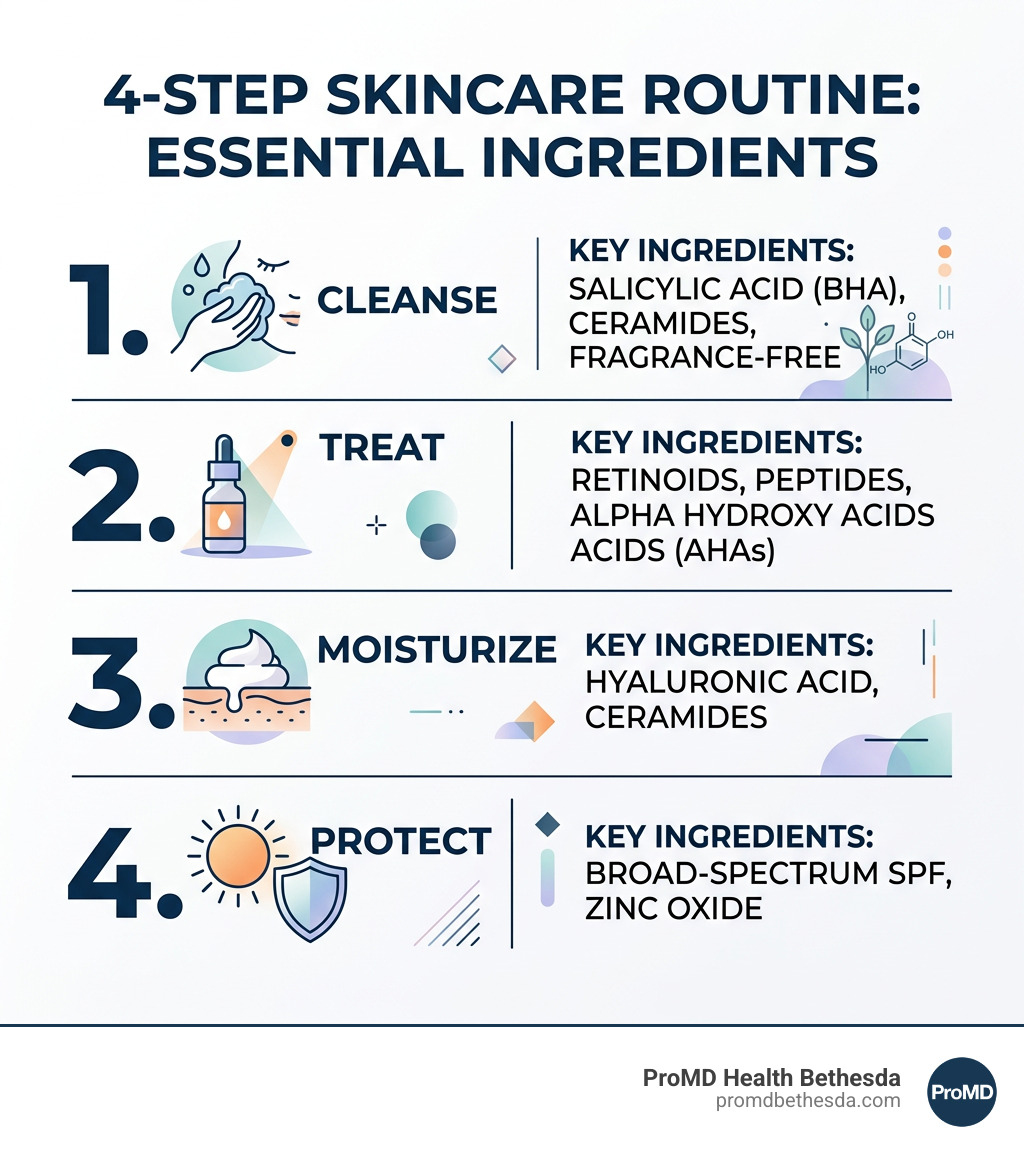
| Dryness / dehydration | Hyaluronic acid, ceramides | Moisturizer, serum |
| Acne / breakouts | Salicylic acid (2% BHA) | Exfoliant, cleanser |
| Aging / fine lines | Retinoids, peptides, AHAs | Serum, treatment |
| Sun damage | Zinc oxide, broad-spectrum SPF | Sunscreen (daily) |
| Dullness / uneven tone | Vitamin C, niacinamide | Serum, moisturizer |
| Sensitivity / redness | Ceramides, fragrance-free formulas | Gentle cleanser, cream |
The basics haven’t changed much: cleanse, treat, moisturize, protect. But with thousands of products on the market, knowing which ones are worth your money — and which are all packaging and no results — takes some digging.
That’s exactly what this guide is for.
I’m Mandy Fawcett, PA-C, a Board-Certified Physician Assistant with over 8 years of clinical experience and specialized training in medical aesthetics — including the skincare protocols that answer the question of what are good skincare products before and after professional treatments. As we walk through what works (and what doesn’t), I’ll draw on both the clinical evidence and the real-world results I see with patients every day.
Determining Your Skin Type: The First Step to Success
Before you drop a dime on a “miracle” serum, we need to talk about your canvas. You wouldn’t use a heavy-duty degreaser on a silk blouse, and you shouldn’t use harsh, oil-stripping acids on dry, flaky skin. Understanding your skin type is the absolute foundation of finding what are good skincare products for your specific needs.

In our Bethesda and Chevy Chase clinics, we generally categorize skin into five main buckets:
- Normal Skin: This is the “Goldilocks” of skin. It isn’t too oily or too dry. It rarely reacts to new products and has a relatively smooth texture with small pores.
- Oily Skin: If your face feels like a “greasy pizza” (to borrow a phrase from a popular Reddit review) by noon, you likely have oily skin. You might notice enlarged pores and frequent breakouts.
- Dry Skin: This skin type often feels tight, especially after washing. It can look dull and may show fine lines more prominently. It needs help retaining moisture through ingredients like petrolatum, which acts as an occlusive to seal hydration in.
- Combination Skin: The most common type. You’re oily in the “T-zone” (forehead, nose, and chin) but dry or normal on your cheeks.
- Sensitive Skin: This is the high-maintenance friend of skin types. It reacts easily to fragrances, synthetic dyes, and even high concentrations of active ingredients. It often presents with redness, itching, or burning.
The Golden Rule: Patch Testing
We cannot stress this enough: always patch test. Even if a product has 6,000 upvotes on Reddit, your skin is unique. Apply a small amount of a new product to your inner forearm or behind the ear for 24 to 48 hours. If you don’t turn bright red or start itching like crazy, you’re likely good to go.
What Are Good Skincare Products for a Daily Routine?
A solid daily routine doesn’t need to be fifteen steps. In fact, over-complicating things often leads to irritation and a compromised skin barrier. When patients in Rockville or Kensington ask us for a “no-fail” starter kit, we point them toward the “Core Three.”
1. Gentle Cleansers
A good cleanser should feel like a “drink of water for your face.” It should remove dirt, excess oil, and pollutants without leaving your skin feeling tight or “stripped.” Look for creamy, non-foaming textures if you are dry or sensitive. If you have oily skin, a lightweight gel cleanser can help manage sebum without over-drying.
2. Hydrating Moisturizers
Moisturizer is non-negotiable for every skin type—yes, even if you’re oily! The goal is to support your skin barrier. Ingredients like ceramides, glycerin, and hyaluronic acid are the gold standard here. For those with very dry skin, a thicker cream is a game-changer, especially at night. If you prefer something light, a “whipped” texture or a moisturizing gel provides hydration without the heavy feel.
3. Broad-Spectrum Sunscreen
If you only use one product, make it sunscreen. Sun protection is the ultimate “insurance policy” for your skin. It prevents premature aging, dark spots, and, most importantly, skin cancer. We highly recommend broad-spectrum formulas with at least SPF 30. Products like EltaMD UV Clear have earned cult-favorite status (with over 1,000 five-star reviews on Dermstore) because they disappear into the skin with a matte finish and don’t irritate acne-prone types.
While a home routine is vital, sometimes your skin needs a professional “reset button.” Regular Facials can deep-clean pores in a way that home washing can’t, while professional Peels help accelerate cell turnover to reveal fresher, brighter skin.
Targeted Solutions: Ingredients and Professional Treatments
Once you have your basics down, you can start adding “active” ingredients to tackle specific goals. This is where the science of Skincare gets exciting.
The Power Players: Niacinamide and Hyaluronic Acid
- Niacinamide (Vitamin B3): This is a true multitasker. Scientific research on niacinamide benefits shows it helps improve skin tone, reduces the appearance of enlarged pores, and strengthens the skin barrier. While some brands offer 10% or 12% concentrations, studies suggest 4% is often the “sweet spot” for efficacy without irritation.
- Hyaluronic Acid: This molecule can hold up to 1,000 times its weight in water. It’s a humectant, meaning it pulls moisture into the skin. It’s perfect for that “plump, dewy” look.
Post-Treatment Care
If you’ve recently had a professional treatment—like a laser session or a deep peel—your skincare needs change. You need “MVP” products that calm inflammation and speed up healing. Look for “clean” ingredient lists that avoid fragrances and harsh acids during this recovery phase.
What are good skincare products for acne and texture?
For those struggling with breakouts, Salicylic Acid (BHA) is your best friend. Unlike AHAs, which are water-soluble, BHA is oil-soluble, meaning it can get deep into the pores to dissolve the “glue” holding dead skin cells and oil together.
Paula’s Choice Skin Perfecting 2% BHA Liquid Exfoliant is a bestseller for a reason; users frequently report smoother texture and a reduction in active spots within just a few weeks. If topical products aren’t enough to clear deep-seated congestion or scarring, Microneedling is an excellent professional option to stimulate collagen and resurface the skin from the inside out.
What are good skincare products for aging and sun damage?
Aging is a natural process, but we can certainly influence how it shows up on our faces. Collagen production begins to taper off significantly between ages 40 and 50, which is when many of our patients in Bethesda start looking for more “active” solutions.
- Retinoids: These are the gold standard for anti-aging. They increase cell turnover and boost collagen production. Pro tip: Start slow (twice a week) to avoid the “retinol burn.”
- Vitamin C: A powerful antioxidant that brightens the skin and protects against environmental damage. Just be careful—Vitamin C is notoriously unstable and can oxidize (turn orange/brown) in about 4 months if not stored away from light.
- Peptides: Think of these as the building blocks of the skin. They help with firmness and elasticity. We often recommend Plated SkinScience for patients looking for cutting-edge, science-backed topical treatments.
[TABLE] Comparing AHAs and BHAs for Exfoliation
| Feature | AHA (Alpha Hydroxy Acid) | BHA (Beta Hydroxy Acid) |
|---|---|---|
| Solubility | Water-soluble | Oil-soluble |
| Primary Goal | Surface exfoliation, anti-aging | Pore clearing, acne |
| Skin Type | Dry, sun-damaged | Oily, acne-prone, sensitive |
| Examples | Glycolic, Lactic, Mandelic | Salicylic Acid |
| Best For | Fine lines, uneven tone | Blackheads, enlarged pores |
Frequently Asked Questions About Skincare
How do I layer my skincare products correctly?
The general rule of thumb is to go from thinnest to thickest consistency.
- Cleanser (Wash it off!)
- Toner (Optional)
- Serums (Water-based first)
- Eye Cream
- Moisturizer
- Oil (Optional, seals everything in)
- Sunscreen (The final step in the morning)
What is the difference between drugstore and high-end products?
Price doesn’t always equal performance. Many drugstore brands like CeraVe and Cetaphil use the same essential ingredients (like ceramides and hyaluronic acid) as luxury brands. High-end products often invest more in “elegant” formulations—meaning they might feel silkier or smell better—and may contain higher concentrations of niche “active” ingredients. However, you can absolutely build a world-class routine on a drugstore budget.
Why is daily sunscreen considered non-negotiable?
Because UV damage is cumulative. Even on cloudy days in Maryland, UVA rays (the ones responsible for aging) penetrate through clouds and windows. According to Reddit’s skincare community and dermatologists alike, sunscreen is the only “holy grail” product that actually prevents the damage that other products are trying to fix.
Conclusion
Finding what are good skincare products doesn’t have to be an expensive game of trial and error. By understanding your skin type, sticking to the core essentials, and introducing targeted actives slowly, you can achieve a healthy, radiant glow without the “greasy pizza” side effects.
At ProMD Health Bethesda, we believe skincare is a vital part of a holistic wellness journey. We don’t just guess what will work for you; we use our AI Simulator so you can preview natural-looking results and make informed decisions about your treatments. Whether you’re interested in refining your at-home routine or exploring professional options like fillers or lasers, we’re here to help you feel confident in your skin.
Beyond topicals, true skin health often starts from within. Consider looking into Skincare Supplements to support your hair and skin health for a truly comprehensive approach to aging gracefully.
Ready to see what’s possible for your skin? We’d love to see you at one of our locations in Bethesda, Chevy Chase, or Rockville for a consultation. Let’s build a routine that actually works for you.

