

Restore Facial Volume: #1 Amazing Guide 2026
Why Facial Volume Loss Happens and What You Can Do About It
Restore facial volume through modern treatments that can turn back the clock on aging. Here’s what you need to know:
- Volume loss begins in your 20s as collagen, elastin, and hyaluronic acid production declines
- Multiple treatment options exist, from injectable fillers (lasting 6-24 months) to collagen stimulators (lasting up to 2 years)
- Most procedures take 30-45 minutes with minimal downtime and immediate results
- Key affected areas include cheeks, temples, under-eyes, and jawline
Time goes by quickly. You might not feel your age, but sometimes your mirror tells a different story.
Facial volume loss is one of the earliest and most noticeable signs of aging. It happens when your face gradually loses fat, muscle, and bone density—creating hollow cheeks, sunken temples, and deepening wrinkles where your skin once looked smooth and full.
This isn’t just about vanity. When you look tired or older than you feel, it can affect your confidence and how you present yourself professionally. The good news? Modern aesthetic medicine offers safe, effective ways to restore that youthful fullness without surgery.
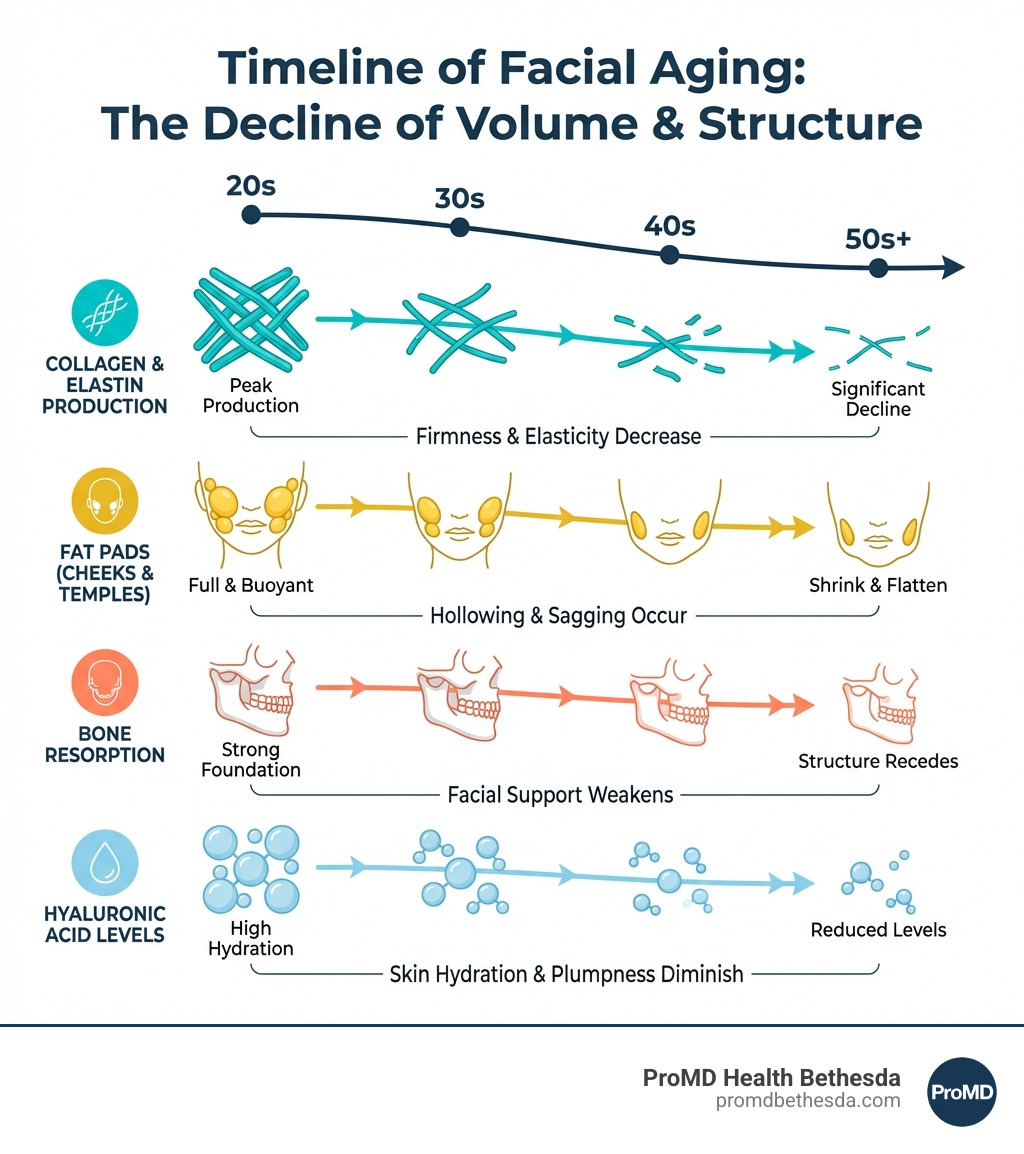
The science is straightforward: as we age, our bodies produce less collagen, elastin, and hyaluronic acid—the building blocks that keep skin firm and plump. Starting in your 20s, this production gradually declines, accelerating in your 40s. Add factors like sun exposure, smoking, or weight fluctuations, and the process speeds up.
Today’s treatments work with your body’s natural structures to replace what time has taken away. Whether you’re noticing early changes or more advanced volume loss, understanding your options is the first step toward looking as vibrant as you feel.
Understanding Facial Volume Loss: The ‘Why’ Behind the Change
Facial volume loss is a complex and natural part of the aging process, affecting not just the skin’s surface but also the underlying structures of the face. It’s a gradual reduction of fat, muscle, and bone in the face that leads to noticeable changes in facial contours and overall appearance. Think of your face as a well-inflated balloon; over time, it slowly deflates, losing its tautness and roundness.
This process is primarily driven by several interconnected factors:
- Collagen Production Decline: As we age, our bodies produce less collagen, the primary structural protein that provides strength and elasticity to our skin. This slowdown in collagen production begins in our 20s and continues throughout life.
- Elastin Reduction: Similarly, the production of elastin, responsible for skin’s ability to snap back into place, diminishes. This leads to increased skin laxity and sagging.
- Hyaluronic Acid (HA) Loss: Hyaluronic acid, a powerful humectant found naturally in our skin, is crucial for maintaining moisture and plumpness. However, the extracellular matrix (ECM), essential for skin strength, resilience, and hydration, experiences a gradual decline in HA levels with age, starting in the 20s and accelerating in the 40s. This reduction contributes to dryness and a loss of youthful fullness.
- Subcutaneous Fat Depletion: Perhaps one of the most significant contributors to facial volume loss is the shrinking and shifting of fat pads in the face. These fat compartments, which give our face its youthful curves and fullness, diminish over time, leading to hollow areas.
- Bone Resorption: It might surprise you, but even our facial bones undergo changes with age. Bone resorption, or the loss of bone density, can alter the underlying support structure of the face, contributing to a sunken appearance. You can learn more about the intricate changes in facial anatomy with aging in this article on the anatomy of the aging face.
The Visible Signs of Volume Loss
The effects of facial volume loss are often unmistakable and can significantly alter our appearance, making us look older, tired, or even gaunt. Common visible signs include:
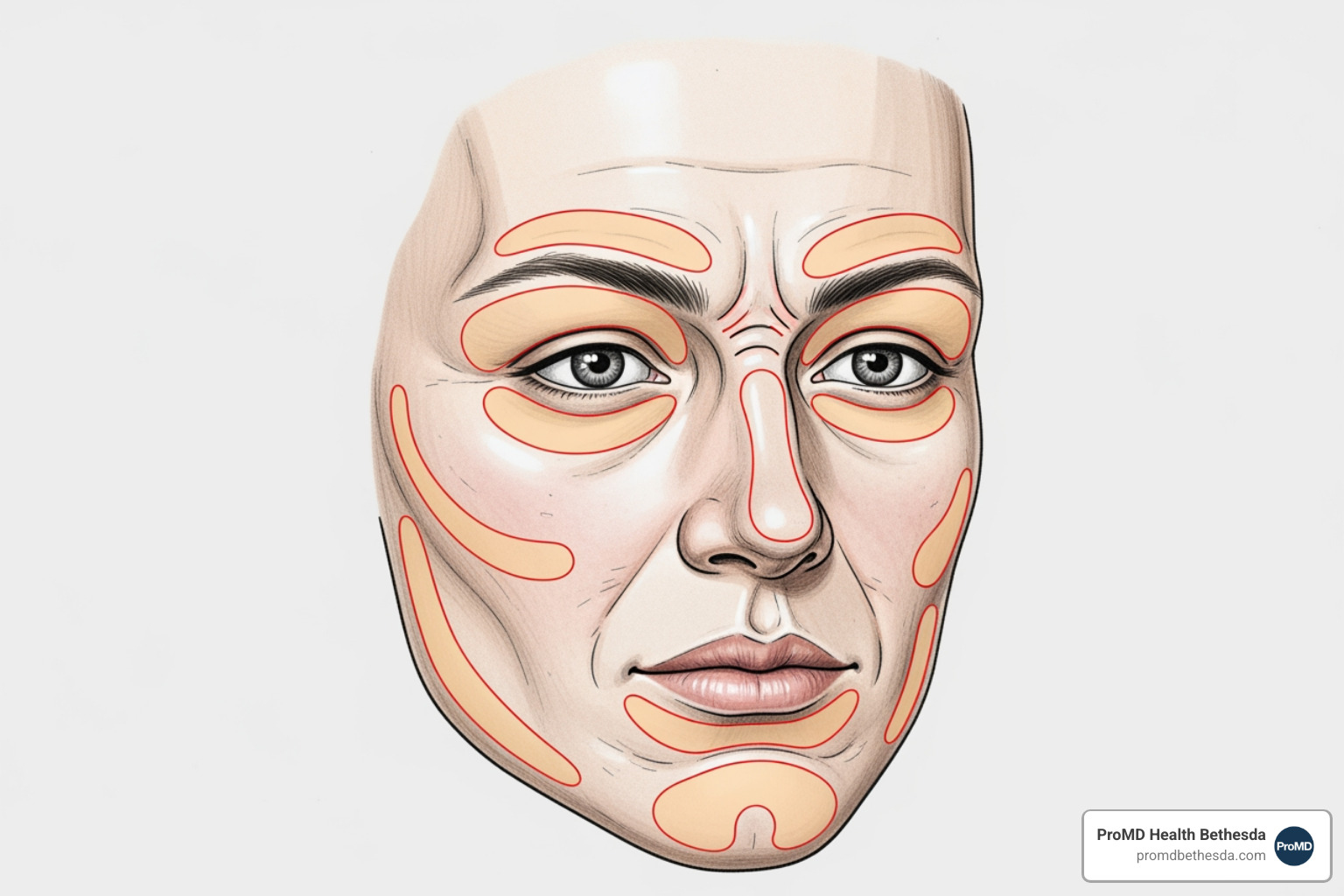
- Hollow Cheeks: As the fat pads in the mid-face diminish, the cheeks lose their youthful plumpness, creating a sunken or flattened appearance.
- Sunken Eyes and Temple Hollowing: The areas around the eyes and temples can become hollow, casting shadows and contributing to a tired, aged look. The temporal hollow, in particular, is a significant manifestation of aging that is often undertreated, yet restoring volume here can achieve dramatic improvements.
- Deepening Wrinkles and Folds: While wrinkles are a natural part of aging, volume loss can exacerbate them. This includes:
- Nasolabial Folds: The lines running from the sides of the nose to the corners of the mouth become more pronounced.
- Marionette Lines: Lines extending downwards from the corners of the mouth, giving a sad or downturned expression.
- Sagging Skin: With reduced underlying support, skin can lose its tautness and begin to sag, leading to jowls and a less defined jawline.
- Jawline Definition Loss: The smooth, firm contour of a youthful jawline can become irregular and less defined as tissues shift downwards.
- Thinning Lips: Lips can lose their natural fullness, appearing thinner and less defined.
- Earlobe Volume Loss: Even earlobes can lose volume and develop creases with age, an area that can be subtly refreshd.
Key Causes and Contributing Factors
While intrinsic aging is the primary driver, several external and lifestyle factors can accelerate or worsen facial volume loss:
- Intrinsic Aging: This is the natural, chronological process where our bodies’ cellular functions slow down, leading to decreased production of collagen, elastin, and hyaluronic acid, and changes in fat distribution and bone structure.
- Sun Exposure (Photoaging): Prolonged UV exposure is a major culprit. Even as little as 10 minutes of sun exposure can contribute to skin damage and accelerate collagen breakdown, leading to premature aging and volume loss. So, don’t forget your SPF!
- Smoking: This habit reduces blood flow, depriving the skin of vital oxygen and nutrients. It also damages collagen and elastin, leading to premature wrinkles and a compromised skin structure.
- Significant Weight Fluctuations: Rapid or substantial weight loss can lead to a noticeable reduction in facial fat, creating a gaunt appearance. Conversely, frequent weight changes can stretch the skin, further impacting its elasticity.
- Genetics: Our genetic makeup plays a role in how and when our faces show signs of aging. Some individuals may be predisposed to earlier or more pronounced volume loss.
- Hormonal Shifts: Hormonal changes, such as the drop in estrogen during menopause, can significantly contribute to reduced collagen production and fat loss, impacting facial volume. For more information on how hormones affect your body, check out our insights on hormone therapy.
How to Effectively Restore Facial Volume: A Comparison of Treatments
When it comes to addressing facial volume loss, we’re fortunate to live in an era where effective, safe, and minimally invasive treatments are readily available. Our philosophy at ProMD Health Bethesda is to help you achieve a refreshed, natural-looking appearance that reflects how vibrant you feel inside.
We focus on advanced solutions that replenish lost volume and stimulate your body’s natural regenerative processes. While surgical options like facelifts are available for more severe cases, many patients seek non-surgical alternatives for their convenience and minimal downtime.
Non-Surgical Approach: Injectable Dermal Fillers
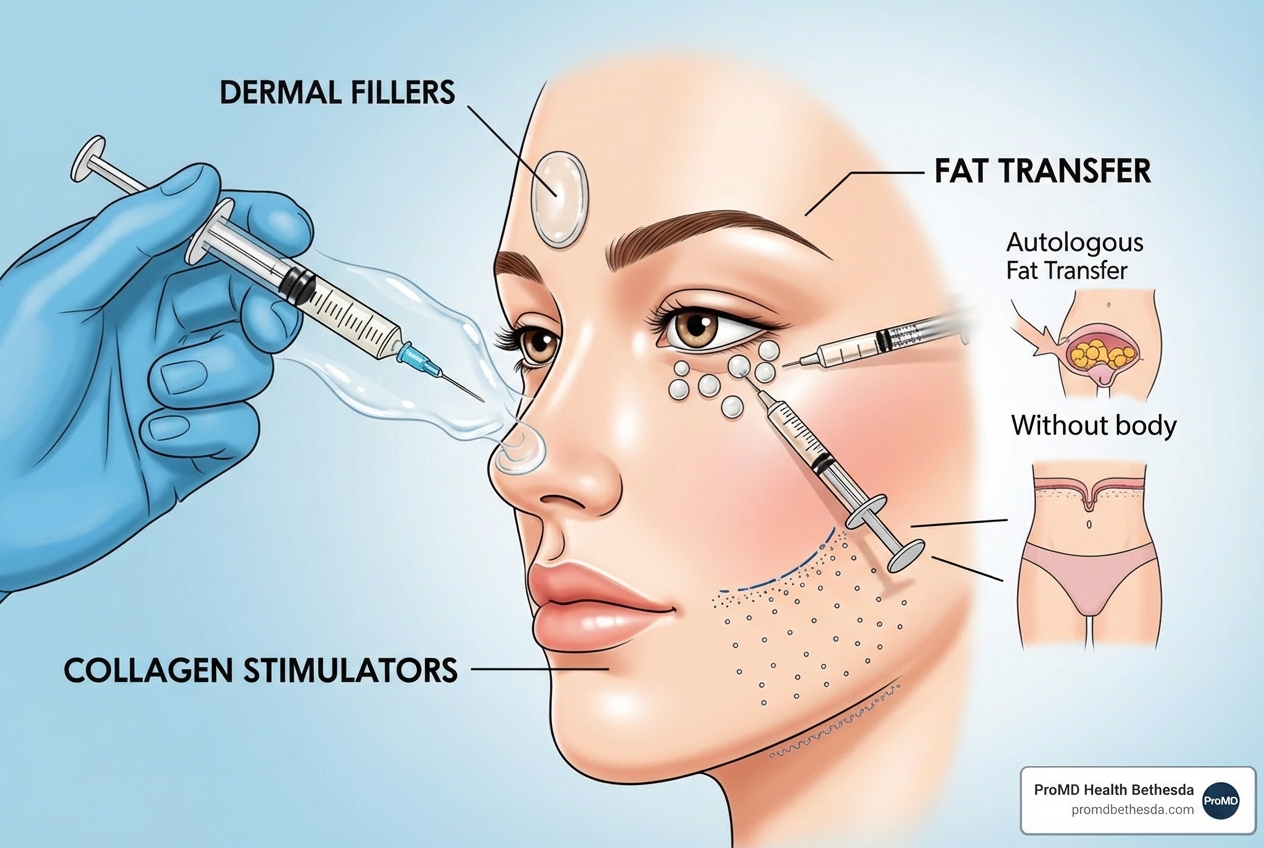
For most individuals seeking to restore facial volume, injectable dermal fillers are a cornerstone of non-surgical rejuvenation. These treatments are incredibly popular because they offer immediate results with minimal discomfort and virtually no downtime.
Dermal fillers are essentially biocompatible, gel-like substances that we carefully inject beneath the skin’s surface. They are FDA-approved and designed to:
- Replenish Volume: Fill in hollow areas, plump up thinning features, and restore youthful contours.
- Smooth Wrinkles and Folds: Reduce the appearance of lines caused by volume depletion and skin laxity.
- Improve Facial Features: Sculpt and define areas like the cheeks, jawline, and lips.
There’s a wide array of dermal fillers available, primarily falling into two categories: hyaluronic acid-based fillers and collagen-stimulating fillers. Each type has unique properties and benefits, allowing us to tailor treatments precisely to your needs. You can explore our comprehensive services for dermal fillers to learn more about how we can help.
A Deep Dive into Dermal Fillers: The Leading Non-Surgical Solution
Dermal fillers have revolutionized the way we approach facial rejuvenation, offering a sophisticated and effective method to restore facial volume without the need for surgery. We find them to be an excellent choice for many of our patients in Bethesda, Chevy Chase, Kensington, Garrett Park, and Rockville, MD, who desire a refreshed and more youthful appearance.
The benefits of dermal fillers are clear:
- Minimal Discomfort: Most treatments involve only mild sensation, especially with topical numbing cream or fillers containing a local anesthetic.
- Quick Procedure: A typical filler session often lasts a mere 30-45 minutes, making it easy to fit into a busy schedule.
- Reversible Options: A significant advantage, particularly with hyaluronic acid fillers, is their reversibility. If you’re not completely satisfied with the results, or if an adjustment is needed, we can safely dissolve the filler.
How Dermal Fillers Work to Restore Facial Volume
At their core, dermal fillers work by literally “filling” in the spaces where volume has been lost. The mechanism of action varies slightly depending on the type of filler, but generally involves:
- Plumping the Skin: When injected, the gel directly adds volume to the treated area, lifting and smoothing the skin from within.
- Attracting Moisture: Hyaluronic acid (HA) fillers are particularly adept at this. HA molecules can hold up to 1,000 times their weight in water, which means they not only provide immediate volume but also continue to draw moisture to the area, keeping the skin hydrated and supple. This scientific principle is explored in depth in The science of hyaluronic acid dermal fillers.
- Providing Structural Support: Some fillers are designed to be injected deeper, providing foundational support to the facial structure, effectively lifting sagging tissues and redefining contours. This helps to counteract the effects of bone and fat loss.
- Stimulating Collagen Production: Certain types of fillers, known as collagen stimulators, work by encouraging your body to produce its own natural collagen over time. This leads to gradual, long-lasting volume restoration and improved skin quality.
Beyond injectables, other treatments like microneedling can also stimulate collagen and improve skin texture, often complementing filler treatments for comprehensive rejuvenation.
Types of Fillers and Their Longevity
The world of dermal fillers offers a variety of choices, each suited for different needs and lasting for various durations. Here’s a quick comparison of the most common types:
| Type of Filler | Mechanism | Treatment Areas “`

