

Facing the Facts about Facials on Teens
Why Teen Skin Deserves Specialized Care
Facials on teens are professional skincare treatments specifically designed to address the unique challenges of adolescent skin, including hormonal acne, excess oil production, and blackheads. These treatments combine deep cleansing, gentle extractions, and education to help teens build healthy skincare habits while boosting confidence during a vulnerable developmental period.
Quick Facts About Teen Facials:
- Best starting age: 12-13 years old, or when puberty-related skin changes begin
- Key benefits: Reduces acne breakouts, prevents scarring, teaches proper skincare techniques
- Treatment frequency: Every 4-6 weeks for maintenance; every 2 weeks for severe acne
- Duration: Typically 45-60 minutes per session
- Safety: Safe for all skin types when performed by licensed professionals using age-appropriate products
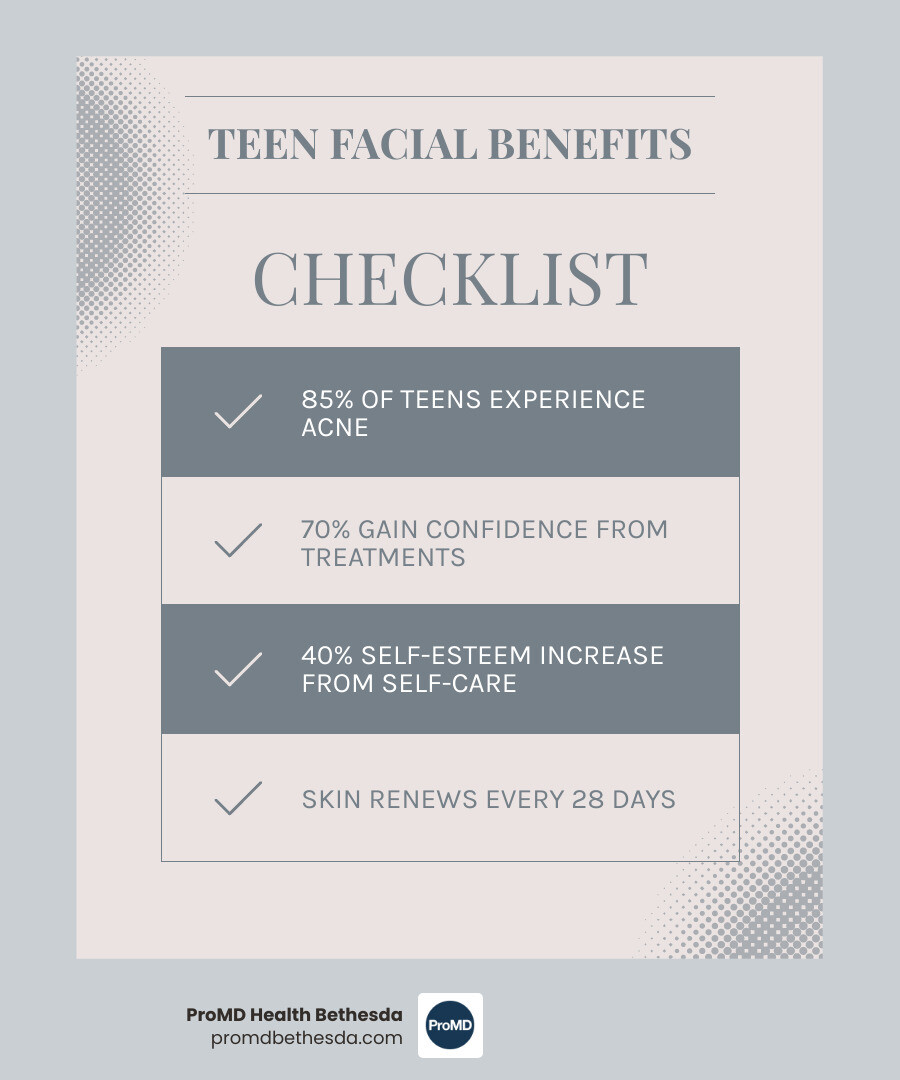
The teenage years can feel like a battlefield when it comes to skin health. As hormones fluctuate and oil glands shift into overdrive, many teens face their first real skincare challenges. About 85% of teenagers experience acne at some point during adolescence, making it one of the most common concerns for this age group.
But here’s the encouraging news: professional facials designed specifically for teen skin can make a dramatic difference. Research shows that 70% of teens felt more confident after receiving skin treatments, and participation in self-care activities like spa visits contributed to a 40% increase in self-esteem among girls aged 13 to 19.
Unlike adult facials that focus on anti-aging and collagen restoration, teen facials target the root causes of adolescent skin issues. They provide deep pore cleansing that at-home products simply can’t match, offer professional extractions that prevent the scarring caused by picking at blemishes, and teach young people the proper techniques they’ll use for decades to come.
Perhaps most importantly, these treatments give teens a sense of control during a time when their bodies feel anything but controllable. Instead of feeling helpless against relentless breakouts, they learn that consistent, professional care combined with good at-home habits can transform their skin—and their confidence.
Understanding the Difference: Teen vs. Adult Facials
When we talk about facials on teens, many parents wonder if their child is simply getting a “mini” version of an adult treatment. The reality is quite different. Teen skin and adult skin are physiologically distinct, and treating them the same way can actually lead to more irritation.
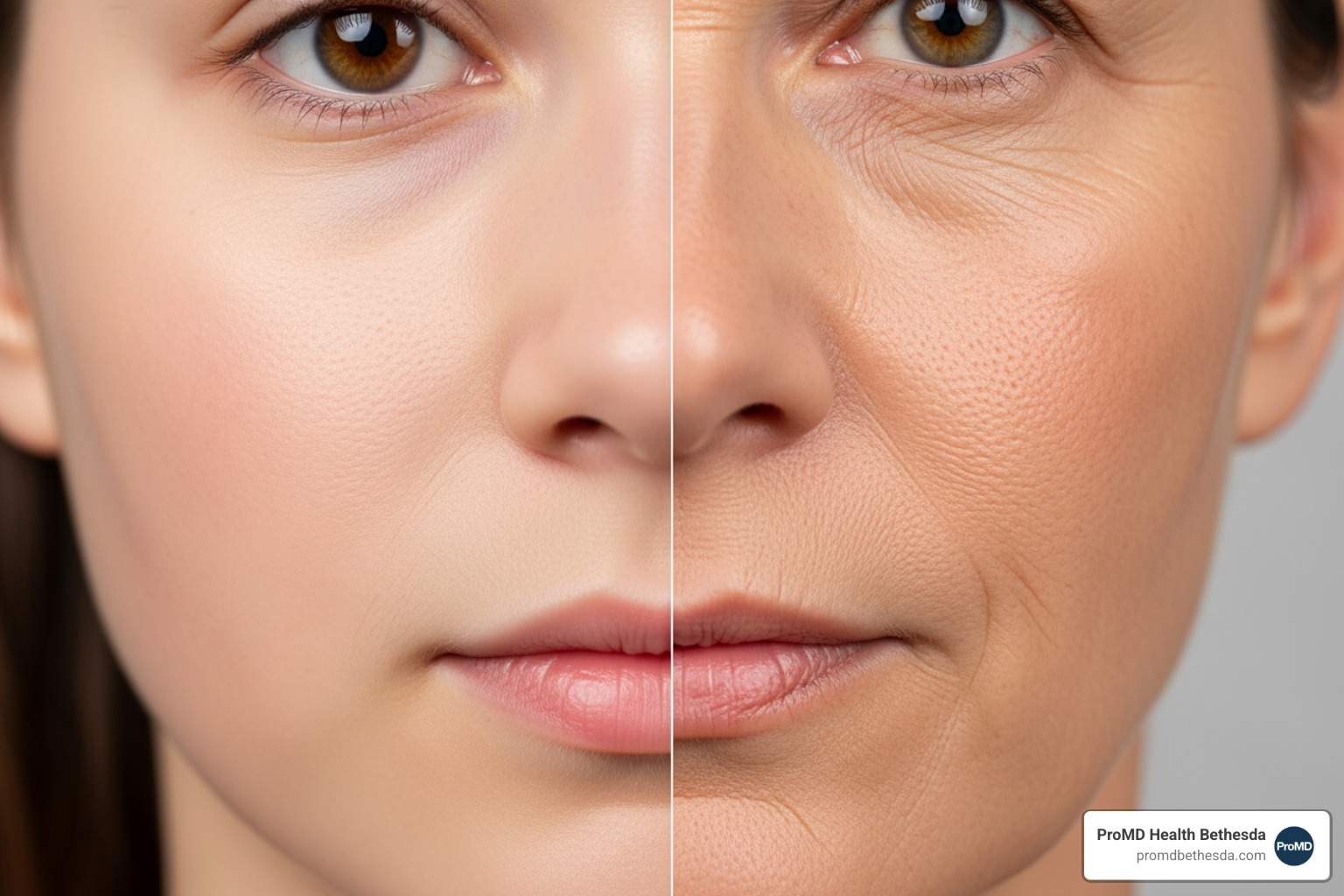
Teenagers have skin that is incredibly resilient and rich in collagen. However, during puberty, an increase in androgens (hormones) causes the sebaceous glands to enlarge and produce significantly more sebum (oil). While an adult facial often focuses on replenishing lost moisture and stimulating collagen to fight wrinkles, a teen facial focuses on balance and decontamination.
| Feature | Teen Skin | Adult Skin |
|---|---|---|
| Primary Concern | Excess oil, acne, blackheads | Wrinkles, sagging, sun damage |
| Sebum Production | High/Overactive | Decreased/Dryness prone |
| Cell Turnover | Fast (approx. 28 days) | Slower (30-50+ days) |
| Goal of Treatment | Deep cleansing & education | Hydration & anti-aging |
| Moisturizer Type | Lightweight, oil-free | Rich, emollient |
One of the biggest differences we see in our Bethesda clinic is the state of the follicular walls. In teens, these walls are often under pressure from excess oil and dead skin cells. If a teen tries to “pop” a blemish at home, they risk rupturing the follicle wall, leading to deeper inflammation and permanent scarring. Professional facials ensure that extractions are done safely, preserving the skin’s integrity.
Addressing Adolescent Skin Challenges
Adolescence brings a specific set of hurdles. Hormonal acne is the most prominent, often appearing in the “T-zone” (forehead, nose, and chin) where oil glands are most concentrated. Beyond just pimples, teens often struggle with stubborn blackheads and “congested” skin that feels bumpy to the touch.
We also see many teens with sensitive skin that reacts poorly to the high-pressure environment of high school sports, sweat, and heavy sunscreens. Professional treatments address these by using soothing, anti-inflammatory ingredients. Furthermore, modern technology like cold atmospheric plasma is becoming a game-changer for teen skin. Scientific research on cold atmospheric plasma for skin repair shows that it is non-thermal and non-ablative, making it a gentle but powerful tool for killing bacteria and calming angry skin without the downtime associated with adult lasers.
Why Adult Products Don’t Work for Teens
It is a common mistake for teens to start using their parents’ skincare products. Most adult products are formulated with heavy oils or rich lipids intended to repair a damaged skin barrier or provide intense hydration for aging skin. On a teenager, these “heavy” ingredients can clog pores and exacerbate acne.
Additionally, many adult “anti-aging” actives—like high-strength retinols or certain alpha-hydroxy acids—can be too harsh for delicate adolescent skin. Teen skin already has a fast cell turnover rate; over-exfoliating with adult-strength products can lead to chemical burns or extreme sensitivity. We advocate for a “less is more” approach, focusing on oil-free formulations and targeted skincare supplements that support the skin from the inside out without disrupting its natural balance.
The Science-Backed Benefits of Facials on Teens
The benefits of facials on teens extend far beyond just looking good for a school dance or yearbook photo. There is significant data supporting why professional intervention is a smart health choice.
As mentioned, 85% of teenagers experience acne, but what is often missed is the long-term physical impact of untreated or poorly treated breakouts. Professional facials provide deep pore detoxification that prevents the formation of cysts. By keeping the pores clear, we significantly reduce the risk of “pitting” or “ice pick” scars that are difficult to treat later in life.
The antimicrobial benefits are also impressive. For instance, research on plasma for wound healing and bacteria reduction has shown that cold plasma treatments can reduce bacterial load on the skin by up to 40%. This is critical for teens because it targets P. acnes bacteria at the source without the need for harsh prescription antibiotics that can have systemic side effects.
Building Lifelong Hygiene Habits
One of the most valuable aspects of a teen facial is the “classroom” element. We don’t just treat the skin; we teach the teen how to care for it. Many adolescents (and quite a few adults!) aren’t sure how to properly cleanse their face or why they need to wear sunscreen even on cloudy days in Maryland.
During a session, we demonstrate proper cleansing techniques—like the importance of washing for a full 60 seconds—and explain how to choose non-comedogenic products. This professional accountability often carries more weight with a teenager than a parent’s advice. By establishing these rituals early, we are helping them navigate clinical skincare and hygiene practices that will keep their skin healthy for the next 50 years.
Psychological Impact of Clearer Skin
We cannot overlook the mental wellness aspect. The teenage years are a time of intense social pressure. When a teen feels that their skin is “failing” them, it can lead to social withdrawal and decreased self-esteem.
The 70% confidence increase reported by teens after skin treatments isn’t just about vanity; it’s about relief. Knowing that there is a professional plan in place reduces the stress associated with unpredictable breakouts. These sessions also serve as a relaxation ritual, providing a rare hour of “unplugged” time away from screens and school pressures, which is a vital form of self-care.
What to Expect: A Step-by-Step Guide to the Treatment
If your teen is nervous about their first visit, knowing the steps can help ease their mind. A typical teen facial at ProMD Health Bethesda is designed to be comfortable and educational.
- Skin Analysis: We start by looking at the skin under a magnifying lamp to identify the skin type (oily, dry, or combination) and specific concerns like blackheads or inflammation.
- Cleansing: A gentle, pH-balanced cleanser is used to remove surface dirt, sweat, and oil.
- Ultrasonic Exfoliation: Instead of harsh scrubs, we often use ultrasonic devices that use vibrations to loosen dead skin cells and clear the “gunk” from pores.
- Steam Therapy: Warm steam is applied to soften the skin and open the pores, making the next step much easier.
- Gentle Extractions: This is the most important part. We safely remove blackheads and whiteheads using professional techniques that don’t damage the skin.
- Customized Mask: We apply a mask tailored to the teen’s needs—perhaps a clay mask for oil control or a sulfur mask for acne-fighting.
- Oil-Free Hydration & SPF: We finish with a lightweight, oil-free moisturizer and a broad-spectrum sunscreen to protect the freshly exfoliated skin.
The best age to start facials on teens
While there is no “magic” number, most professionals recommend starting facials on teens around age 12 or 13. This usually coincides with the onset of puberty and the first signs of blackheads or small breakouts.
Starting early is a form of preventive care. If we can manage the skin before severe acne develops, we can often avoid the need for more aggressive treatments like chemical peels for acne or prescription medications later on. If you notice your child is starting to “pick” at their face or seems distressed by their skin, it’s the perfect time to book a consultation.
Are facials on teens safe for sensitive skin?
Absolutely. In fact, teens with sensitive or “reactive” skin often benefit the most from professional care. We use non-comedogenic, fragrance-free products specifically designed to reduce redness and calm irritation.
For teens who have developed scarring from previous breakouts, we can also discuss long-term options like microneedling once the active acne is under control. Every protocol is personalized; we never use a one-size-fits-all approach, especially when dealing with the delicate balance of adolescent skin.
Frequency and Maintenance for Long-Term Results
Skincare is a marathon, not a sprint. A single facial will provide immediate “glow” and cleaner pores, but long-term results require a schedule.
Generally, we recommend a facial every 4 to 6 weeks. This aligns with the natural 28-day skin renewal cycle, allowing us to clear out new congestion as it forms. However, for teens struggling with severe or “labile” acne, we may suggest a more frequent schedule—perhaps every 2 weeks—until the inflammation is under control.
Seasonal adjustments are also key. Maryland summers are humid, often requiring more frequent deep cleanses, while our winters can be drying, necessitating a shift toward more hydrating, barrier-protecting treatments. We work with families to create science-backed skincare plans that fit into a busy school and sports schedule.
At-Home Tips to Complement Professional Care
What happens between appointments is just as important as the treatment itself. We encourage our teen patients to follow these simple rules:
- Double Cleansing: If they wear makeup or heavy sports sunscreen, they should use a gentle oil-based cleanser followed by a water-based one to ensure nothing is left behind.
- Alcohol-Free Toners: Avoid the “sting.” Modern toners should hydrate and balance pH, not strip the skin with harsh alcohols.
- Daily SPF 30+: This is non-negotiable. Sun damage can make acne scars turn darker and last longer.
- Hydration & Sleep: Drinking water and getting 8 hours of sleep helps the skin repair itself.
- The “No-Pick” Rule: We tell our teens: “If you squeeze it, you own it (the scar) for life.” We provide professional extractions so they don’t have to do it themselves.
Frequently Asked Questions about Teen Skincare
How often should my teen get a facial?
For general maintenance and education, every 4-6 weeks is ideal. If they are dealing with active, inflammatory acne, we might recommend sessions every 2 weeks for a short period to get the bacteria under control.
Do teen facials hurt or cause scarring?
When performed by a licensed professional, facials should not be painful. Extractions can feel like a tiny “pinch,” but they are far less painful (and much safer) than trying to pop a pimple at home. Professional facials actually prevent scarring by managing breakouts safely.
What should parents know before booking a treatment?
Parental consent is required for teens. We also encourage parents to be involved in the first consultation. It’s helpful for you to know the routine so you can support your teen’s habits at home. Also, let us know if your teen is currently using any prescription topicals from a dermatologist, as we may need to adjust our products accordingly.
Conclusion
At ProMD Health Bethesda, we believe that facials on teens are an essential part of a young person’s wellness journey. We combine expert care with advanced technology, such as our AI Simulator, which allows patients (and parents!) to preview natural-looking results and feel confident in their treatment plan.
Whether your teen is dealing with persistent breakouts or simply wants to learn how to care for their skin, our team is here to provide a supportive, educational, and effective experience. We serve families throughout Bethesda, Chevy Chase, Kensington, Garrett Park, and Rockville, helping the next generation put their best face forward.
Ready to help your teen achieve clearer skin and lasting confidence? Book a consultation for facials on teens at ProMD Health Bethesda today and let’s start building a healthy foundation for their skin together.

