
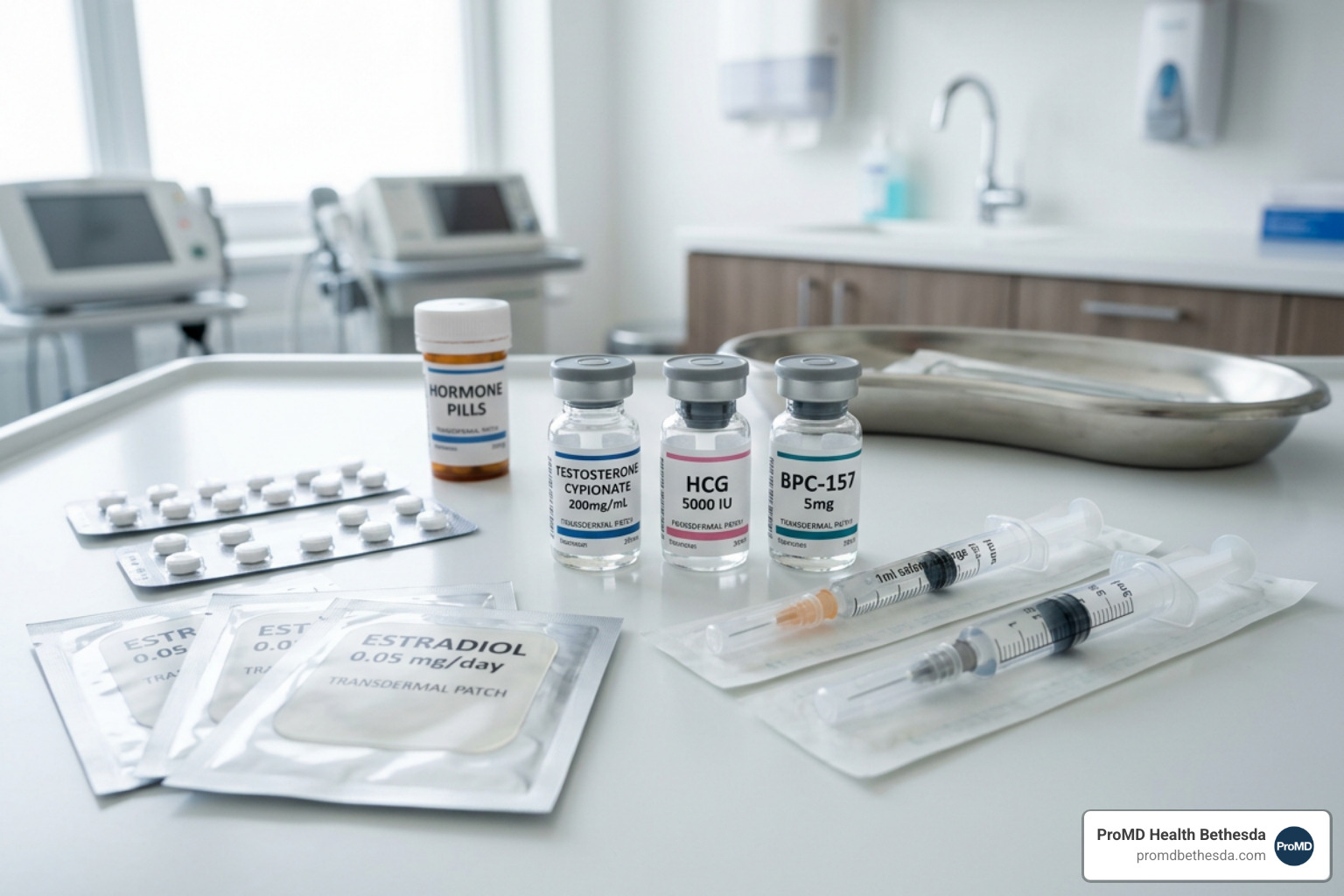
Everything You Need to Know About Combining Peptides and HRT
Why More People Are Asking About Peptide and Hormone Replacement Therapy
What is peptide and hormone replacement therapy is one of the fastest-growing questions in modern wellness — and for good reason.
Here’s a quick answer:
| Therapy | What It Is | How It Works |
|---|---|---|
| Peptide Therapy | Use of short amino acid chains (2-50 AAs) as signaling molecules | Tells your body to produce hormones, repair tissue, or regulate metabolism |
| Hormone Replacement Therapy (HRT) | Direct supplementation of declining hormones (estrogen, testosterone, progesterone, thyroid) | Replaces what your body no longer makes enough of |
| Combined Approach | Using both therapies together | Restores hormonal baseline and triggers targeted cellular optimization |
As we age, two things happen at once: hormone levels drop, and the cellular signals that regulate repair, metabolism, and energy become weaker. Neither problem alone tells the full story — which is why many patients need more than one solution.
The good news? These two therapies can work together, and understanding how is the key to getting real, lasting results.
I’m Mandy Fawcett, PA-C, a Board-Certified Physician Assistant with over 8 years of clinical experience, including a specialized focus on women’s health and osteoporosis — areas where understanding what is peptide and hormone replacement therapy is essential to patient outcomes. At ProMD Health Bethesda, I work with patients every day to build personalized protocols that go beyond symptom management and target root causes.
In this guide, we’ll walk you through everything you need to know — from how each therapy works, to how they can be safely combined for maximum benefit.
What is Peptide and Hormone Replacement Therapy?
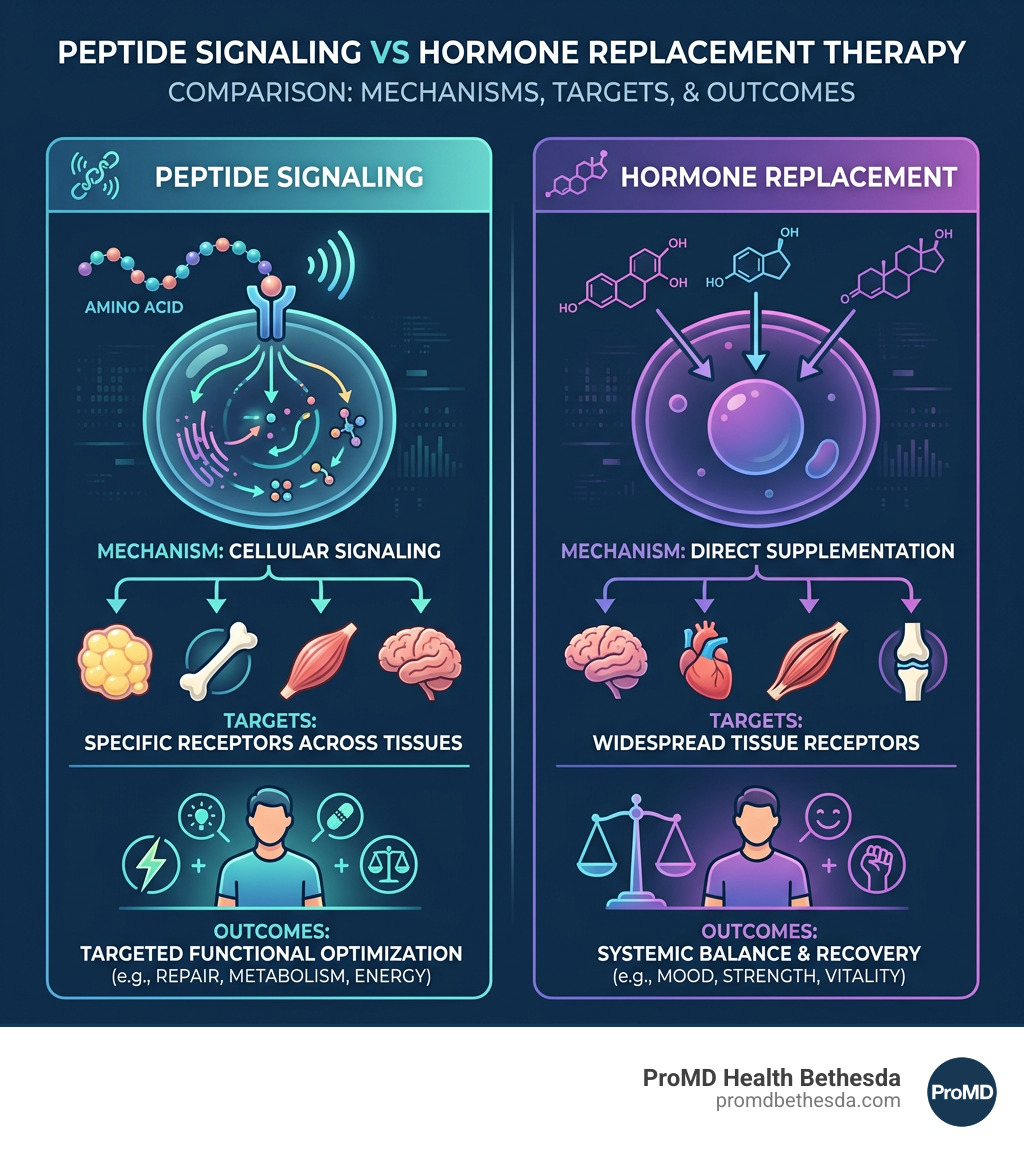
To truly grasp the power of these treatments, we have to look at how our bodies communicate. Think of your body as a high-end restaurant. Hormone Replacement Therapy (HRT) is like delivering a fresh shipment of high-quality ingredients directly to the kitchen because the pantry is empty. Peptide therapy, on the other hand, is like the head chef giving specific instructions to the staff to start cooking more efficiently.
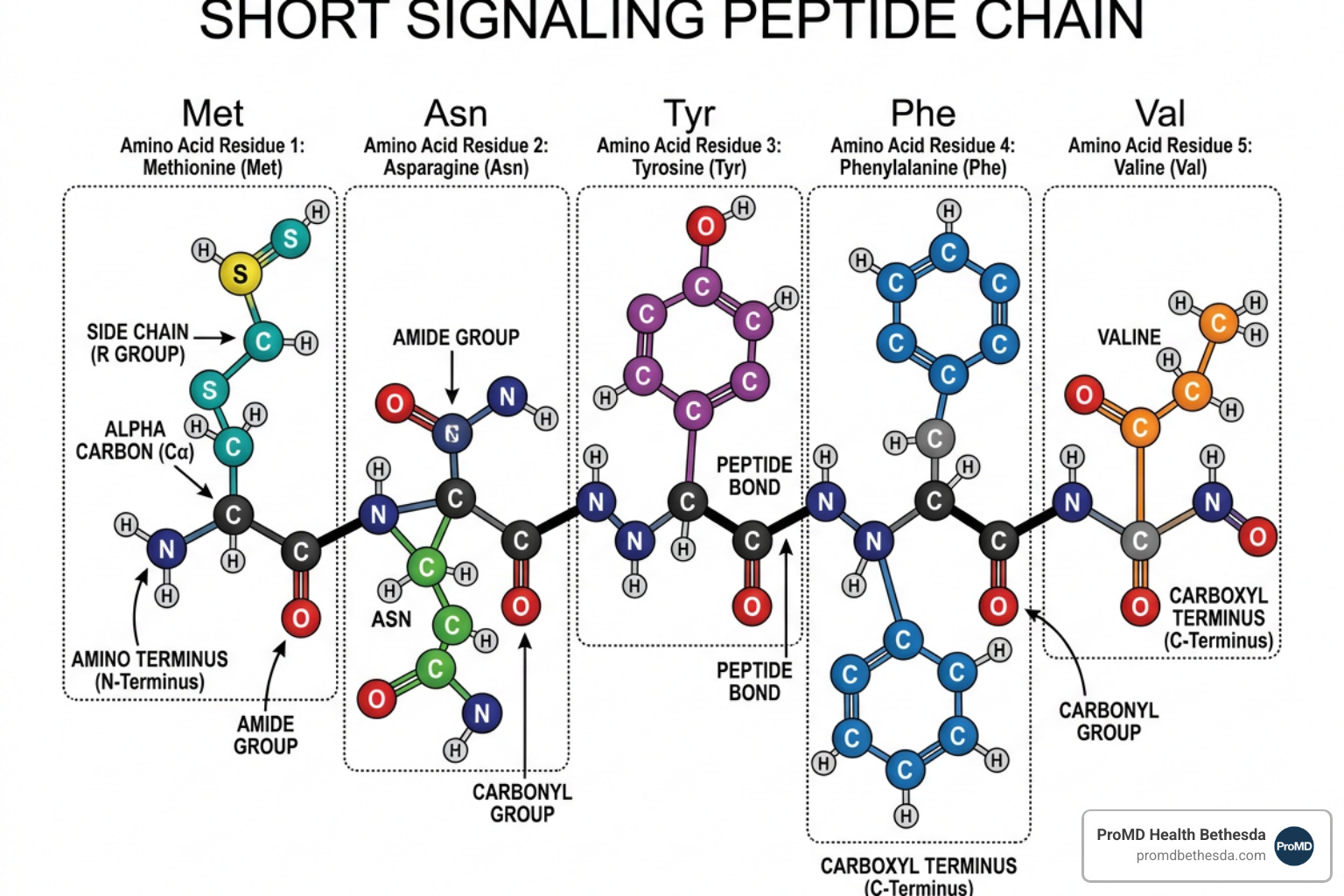
Peptides are short chains of 2 to 50 amino acids. While proteins are long and complex, peptides are small enough to act as precise signaling molecules. They bind to receptors on your cells and tell them to perform specific tasks, such as releasing natural growth hormones, burning fat, or repairing a damaged tendon. According to research in the Strategic Approaches to Improvise Peptide Drugs, these molecules are becoming the next generation of therapeutics because they are highly targeted and generally well-tolerated.
Hormone Replacement Therapy (HRT) focuses on systemic balance. When your thyroid, adrenal glands, or reproductive organs stop producing enough hormones, your entire system feels the “lag.” By using bioidentical hormones—which are molecularly identical to the ones your body naturally produces—we can restore that systemic balance.
Understanding What is Peptide and Hormone Replacement Therapy for Men
For our male patients in Bethesda and Chevy Chase, the conversation often starts with “andropause”—the male equivalent of menopause. As testosterone levels decline (often starting in the 30s), men notice a stubborn “spare tire” around the waist, a loss of muscle mass, and a frustrating dip in libido and mental clarity.
When men ask us what is peptide and hormone replacement therapy for their specific needs, we often look at a two-pronged approach. Testosterone Replacement Therapy (TRT) provides the “raw material” to restore energy and sexual function. Meanwhile, peptides like Ipamorelin or CJC-1295 can be added to stimulate the natural release of growth hormone, which helps with recovery from workouts and metabolic health. You can find more info about hormone therapy on our dedicated service page.
What is Peptide and Hormone Replacement Therapy for Women?
Women often face a more abrupt shift during perimenopause and menopause. Symptoms like hot flashes, night sweats, and mood swings can be debilitating. But there’s a deeper concern: bone density. Clinical data shows that Bioidentical Hormone Replacement Therapy (BHRT) provides a 70-80% reduction in fracture risk and effectively reduces vasomotor symptoms (like hot flashes) by the same margin.
Peptide therapy adds a layer of “fine-tuning” for women. While estrogen and progesterone handle the systemic symptoms, peptides can target specific goals like skin elasticity, weight management, or immune support. If you are struggling with the transition into menopause, you can read more info about hormone replacement therapy in Bethesda to see how we help women reclaim their vitality.
Comparing Mechanisms, Administration, and Effects
Choosing between these therapies—or deciding to combine them—requires understanding how they differ in action.
| Feature | Peptide Therapy | Hormone Replacement Therapy (HRT) |
|---|---|---|
| Primary Goal | Cellular signaling and specific optimization | Restoring deficient hormone levels |
| Mechanism | Stimulates natural production/action | Direct supplementation (replacement) |
| Target | Highly specific (e.g., fat cells, pituitary) | Systemic (affects the whole body) |
| Standard Delivery | Subcutaneous injections, nasal sprays, oral | Pellets, injections, creams, patches |
| Long-term Use | Often cycled (e.g., 3 months on, 1 off) | Usually ongoing to maintain levels |
Research published in Therapeutic peptides: Historical perspectives and future directions highlights that because peptides are so specific, they often have fewer side effects than traditional medications that affect the entire body at once.
Delivery Methods and Absorption
At ProMD Health Bethesda, we prioritize bioavailability—ensuring the treatment actually gets where it needs to go.
- Subcutaneous Injections: Most peptides are administered via a tiny insulin-sized needle into the fatty tissue. It’s virtually painless and ensures the peptide enters the bloodstream directly.
- Hormone Pellets: For HRT, many of our patients prefer Biote pellets. These are about the size of a grain of rice and are inserted under the skin (usually in the hip area). They provide a steady-state release of hormones for 3 to 6 months, eliminating the “rollercoaster” effect of creams or pills.
- Creams and Troches: These are great for daily adjustments but require more diligence from the patient to ensure consistent dosing.
Onset of Action and Expected Timelines
We live in a world of instant gratification, but biological optimization takes time.
- HRT: Many patients feel “the lift” in mood and energy within 2 to 4 weeks.
- Peptides: While some (like PT-141 for libido) work quickly, most metabolic and repair peptides require 3 to 6 months for full optimization. You’re essentially retraining your cells, which doesn’t happen overnight!
Synergistic Benefits for Longevity and Performance
This is where the magic happens. When you combine the “restoration” of HRT with the “optimization” of peptides, the results are often greater than the sum of their parts.
For example, GLP-1 peptides (like Semaglutide or Tirzepatide) have revolutionized weight loss. Statistics show these peptides can produce a 15-21% reduction in body weight and a 26% reduction in major adverse cardiac events. When paired with Testosterone Replacement Therapy, which helps maintain lean muscle while losing fat, the transformation is much more sustainable.
The Global Review on Short Peptides notes that peptides like BPC-157 are incredible for tissue regeneration. If you’re an active adult in Kensington or Garrett Park dealing with joint pain, combining BHRT (to support bone and joint health) with BPC-157 (to repair connective tissue) can get you back on the tennis court or golf course faster.
Anti-Aging and Skin Rejuvenation
We can’t talk about what is peptide and hormone replacement therapy without mentioning the “glow.”
- GHK-Cu: This copper peptide is a superstar for skin. Clinical trials show it significantly improves skin elasticity and reduces wrinkles by boosting collagen production.
- BHRT: Estrogen plays a massive role in skin thickness and hydration. Combining these two means you are supporting your skin from the inside out (hormones) and the outside in (peptides).
Immune Support and Injury Repair
As we age, our “immunosenescence”—the aging of the immune system—makes us more prone to illness and slower to heal. Peptides like Thymosin alpha-1 have been studied for their ability to modulate the immune response. When your hormones are balanced, your body is in a “pro-repair” state. Adding targeted peptides acts as a catalyst for that repair. For those interested in the cellular side of healing, check out more info about peptide therapy.
Safety Profiles, Risks, and Clinical Monitoring
We take safety very seriously. While both therapies are generally safe, they are medical treatments that require professional supervision.
- Potential Side Effects: HRT can sometimes cause fluid retention, breast tenderness, or acne if not balanced correctly. Peptides may cause mild injection site reactions or increased appetite (especially with GH-stimulating peptides).
- Monitoring: We don’t guess; we test. Regular blood work is mandatory to monitor IGF-1 levels, metabolic markers, and hormone concentrations.
Research on Growth Hormone Deficiency Syndrome emphasizes that while growth hormone stimulation (via peptides) is beneficial, it must be monitored to ensure levels stay within a healthy physiological range.
The Importance of Diagnostic Testing
Before we start any protocol, we run comprehensive panels. This includes checking thyroid function, inflammatory markers (like CRP), and a full metabolic suite. This allows us to create a personalized dose that fits your unique biochemistry. We aren’t just looking to put you in the “normal” range; we are looking to put you in the optimal range.
Regulatory Status and Sourcing
The world of peptides can be a bit like the Wild West online. It is crucial to source these from reputable, 503B accredited compounding pharmacies. “Research grade” peptides found online are not intended for human use and can be contaminated. At ProMD Health Bethesda, we only use clinical-grade, purity-tested medications.
Choosing a Provider and Starting Your Protocol
When you’re ready to explore what is peptide and hormone replacement therapy, the provider you choose makes all the difference. You want someone who treats the “whole you,” not just a lab value.
At ProMD Health Bethesda, our unique selling point is our AI Simulator. We know that “anti-aging” can be a scary term—no one wants to look overfilled or “done.” Our AI technology allows patients to preview natural-looking results, providing a visual roadmap of their journey. This builds confidence and ensures that our goals are perfectly aligned with yours.
Our process is simple:
- Consultation: We listen to your story and your goals.
- Lab Work: We get a clear picture of your internal health.
- The Plan: We build a protocol that might include HRT, peptides, or both, alongside nutrition and sleep hygiene advice.
- Monitoring: We check in regularly to adjust your doses as your body changes.
Frequently Asked Questions about Peptides and HRT
Can peptide therapy and HRT be safely combined?
Absolutely. In fact, they are often synergistic. A classic example is combining CJC-1295/Ipamorelin (peptides) with Testosterone (HRT). The testosterone provides the androgenic support for muscle and libido, while the peptides stimulate the natural growth hormone release for better sleep, skin, and fat metabolism.
How much do these therapies typically cost?
Pricing varies based on the specific peptides used and the frequency of hormone pellet insertions. Generally, HRT is an ongoing investment in your baseline health, while peptides might be used in cycles to achieve specific goals. We offer transparent pricing and various packages to make these therapies accessible to our patients in the Bethesda area.
Who is the ideal candidate for combination therapy?
The ideal candidate is someone experiencing age-related decline (fatigue, weight gain, brain fog) who hasn’t found full relief from lifestyle changes alone. It’s also excellent for high-performers looking to optimize their recovery and metabolic health.
Conclusion
The journey to feeling like yourself again doesn’t have to be a mystery. By understanding what is peptide and hormone replacement therapy, you’re taking the first step toward root-cause medicine. Whether you’re looking to lose weight, regain your energy, or simply “turn back the clock” on your cellular health, we are here to guide you.
Don’t settle for “fine” when you can feel vibrant. Schedule your peptide therapy consultation today at ProMD Health Bethesda and let’s see what your personalized roadmap to vitality looks like. We serve patients across Bethesda, Chevy Chase, Kensington, Garrett Park, and Rockville, MD. Your best self is waiting!

