

Non surgical facelift: Revolutionary 2026
Why More Professionals Are Choosing Non-Surgical Facelift Options
A non-surgical facelift is a combination of minimally invasive treatments that refresh your face without incisions, general anesthesia, or extended recovery time. These procedures use injectables, energy-based devices, and regenerative therapies to lift, tighten, and restore volume for natural-looking results.
What You Need to Know:
- No Surgery Required – Treatments use needles, energy devices, or threads instead of scalpels
- Minimal Downtime – Most people return to work within 1-2 days, compared to weeks for surgery
- Natural Results – Gradual improvements that improve rather than drastically change your appearance
- Multiple Options – Includes dermal fillers, Botox, PRP, radiofrequency, ultrasound, lasers, and thread lifts
- Results Last 6 Months to 3 Years – Depending on the specific treatment and individual factors
- Cost Effective – Typically $500-$4,000 per session versus $10,000-$20,000+ for surgical facelifts
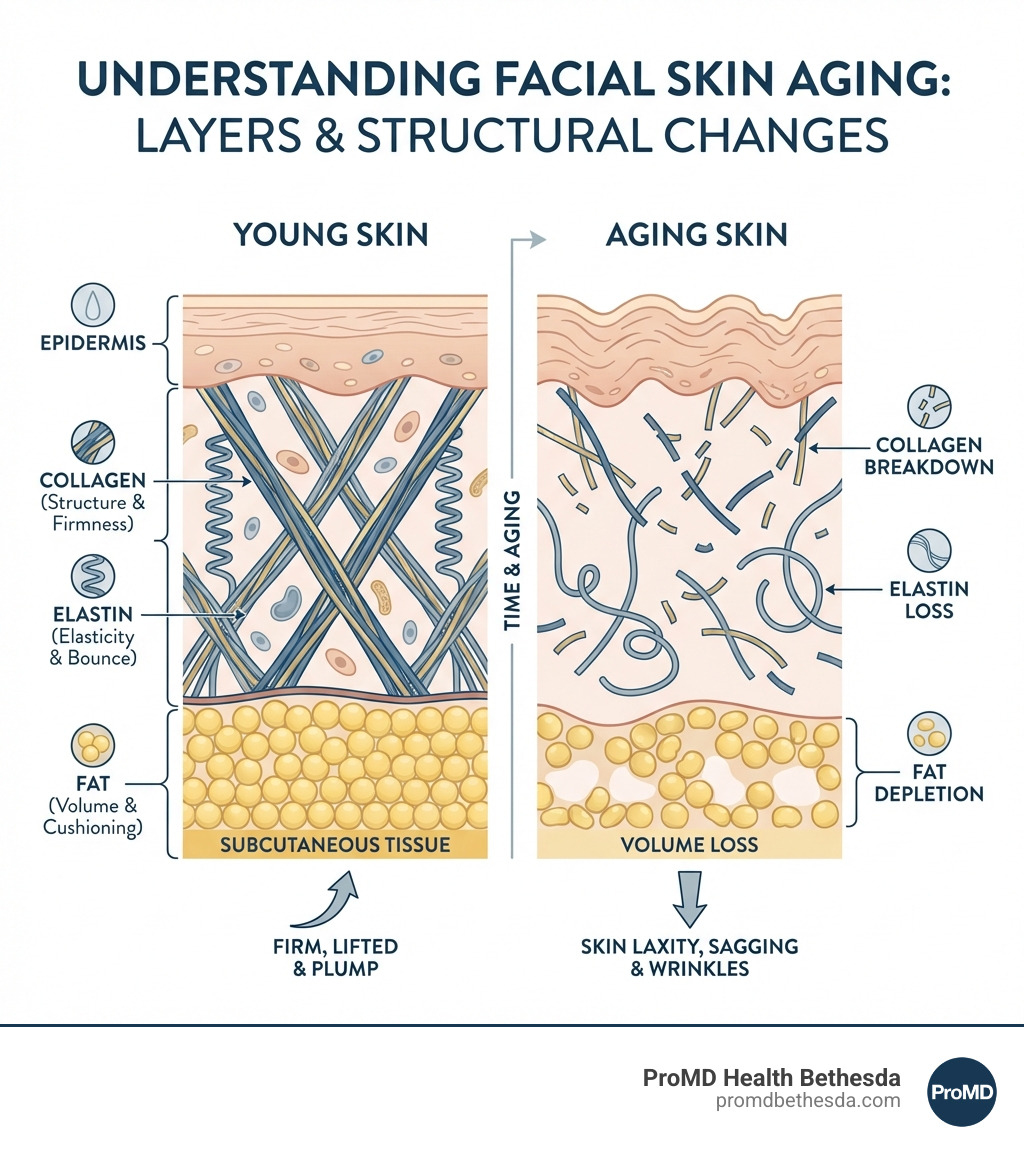
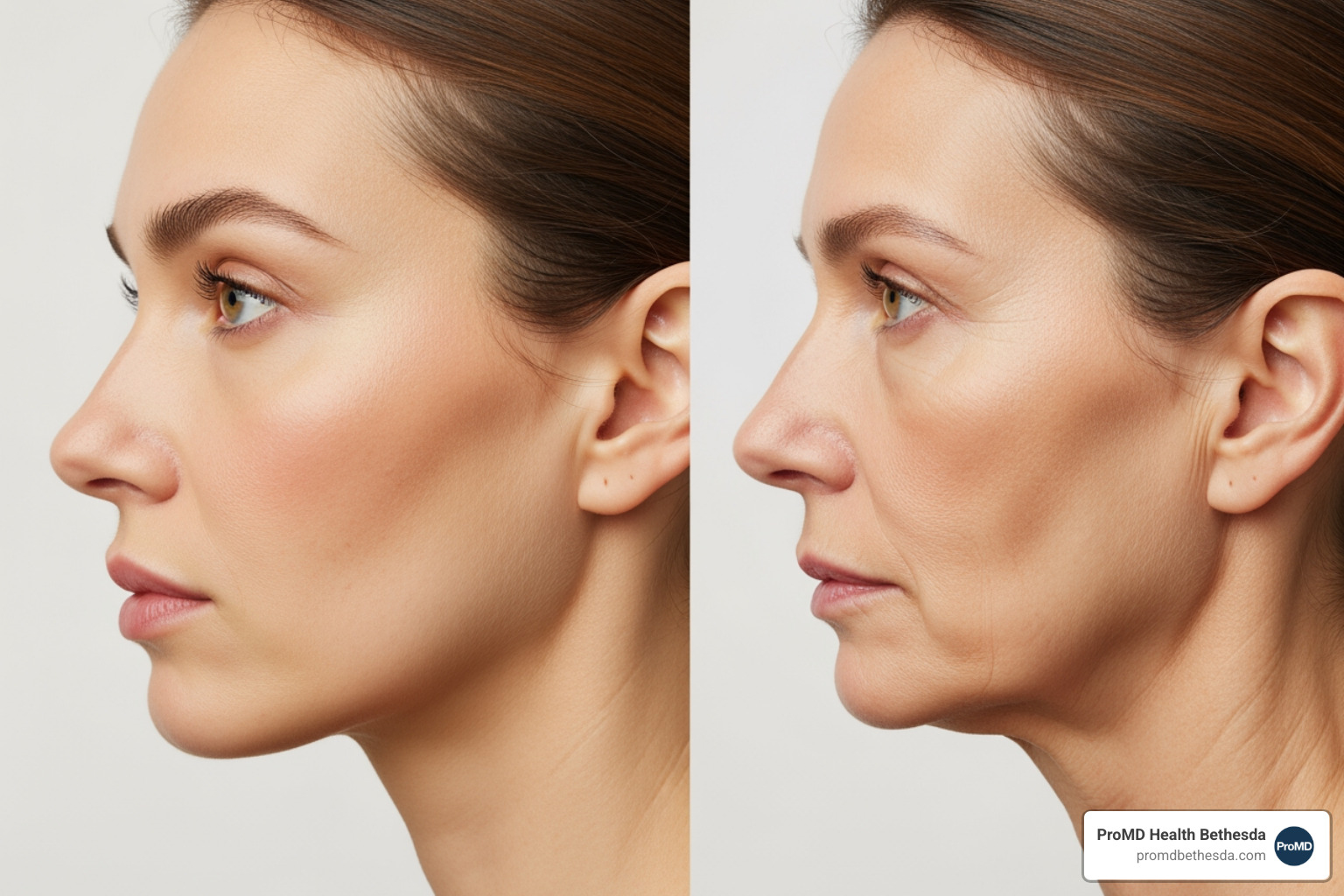
As we age, our skin loses collagen and elastin. Gravity pulls facial tissues downward. Volume disappears from cheeks and temples. These changes create sagging skin, deep wrinkles, and hollow areas that make us look older than we feel.
In 2020 alone, over 13 million minimally invasive facial procedures were performed in the United States. More than 188,000 Americans specifically chose non-surgical skin tightening as an alternative to traditional facelifts.
The appeal is clear: modern technology now allows us to address multiple signs of aging without going under the knife. You can achieve significant rejuvenation during your lunch break and return to your professional life with minimal interruption.
For busy professionals in Bethesda and surrounding areas, these treatments offer the perfect balance of effectiveness, convenience, and natural-looking outcomes. The key is understanding which combination of treatments will address your specific concerns.
Understanding the Non-Surgical Facelift
When we talk about a non-surgical facelift, we aren’t talking about a single magic wand. Instead, it is a holistic approach to facial rejuvenation. Think of it as a customized toolkit. Depending on whether you are dealing with “tired eyes,” sagging jowls, or deep smile lines, we pick the right tools to rebuild your facial structure from the inside out.
In the past, if you wanted to look younger, you had to commit to a major surgery that involved being “put under” and hiding away for a month while the bruising subsided. Today, we use what is often called a “liquid facelift” or a “combination lift” to achieve similar goals with far less drama.
Defining the Procedure
At its core, a non-surgical facelift focuses on three main pillars: restoration of volume, relaxation of wrinkles, and tightening of the skin. Unlike surgery, which simply pulls the skin tighter, non-surgical methods often focus on dermal rejuvenation.
We look at the skin’s biological building blocks: collagen and elastin. Collagen provides the framework (the “scaffolding”) of your skin, while elastin provides the “snap-back” quality. As these proteins degrade, the skin becomes crepey and thin. Our treatments are designed to trigger “neocollagenesis”—the body’s natural process of creating new collagen—to firm and plump the skin naturally.
| Feature | Surgical Facelift | Non-Surgical Facelift |
|---|---|---|
| Anesthesia | General (Deep sleep) | Local or Topical (Numbing cream) |
| Incisions | Large cuts around ears/hairline | None (only tiny needle points) |
| Downtime | 2 to 4 weeks | 0 to 5 days |
| Cost | $10,000 – $25,000+ | $1,500 – $5,000 |
| Longevity | 10+ years | 6 months to 3 years |
| Risk Level | High (Infection, nerve damage) | Low (Bruising, temporary swelling) |
Key Differences from Traditional Surgery
The most significant difference is how we handle the “lift.” A surgeon physically cuts away excess skin and sutures the remaining tissue into a new position. While effective for severe sagging, it can sometimes result in a “windblown” or overly tight look.
In contrast, a non-surgical facelift uses volume to create a lift. By strategically placing fillers in the cheeks or temples, we can actually “pull” the lower face upward. It’s a bit like inflating a balloon that has lost some air—as it fills, the wrinkles on the surface smooth out.
Furthermore, the lack of general anesthesia is a game-changer for safety. Many of our patients in Chevy Chase and Rockville prefer avoiding the risks associated with being fully unconscious. According to scientific research on collagen and elastin, non-invasive treatments that stimulate these proteins can significantly improve skin thickness and elasticity without the trauma of a scalpel.
Primary Modalities: Injectables and Regenerative Treatments
The “bread and butter” of the non-surgical facelift are injectables. These are divided into two main camps: neuromodulators (like Botox) and dermal fillers.
The Role of Fillers in a Non-Surgical Facelift
As we age, we lose the “fat pads” in our face. This is why we develop hollows under the eyes and why our cheeks seem to slide down toward our jawline, creating jowls. Dermal fillers are gel-like substances—usually made of Hyaluronic Acid (HA), a sugar already found in your body—that we use to replace that lost volume.
In a non-surgical facelift, we use fillers to:
- Restore Midface Volume: Plumping the cheeks to lift the lower face.
- Smooth Nasolabial Folds: Softening the lines that run from the nose to the corners of the mouth.
- Erase Marionette Lines: Filling the lines that run from the mouth down to the chin.
- Contour the Jawline: Creating a sharp, youthful distinction between the face and neck.
We often combine these with neuromodulators. While fillers add volume, Botox, Dysport, and Daxxify relax the muscles that cause “dynamic” wrinkles, such as crow’s feet and forehead furrows. By relaxing these muscles, we stop the skin from folding, allowing it to smooth out over time.
Platelet-Rich Plasma (PRP) and PRF
If you want to go beyond just “filling” and actually “repairing,” regenerative treatments are the answer. Platelet-Rich Plasma (PRP) is often called “liquid gold.” We take a small sample of your own blood, spin it in a centrifuge to concentrate the platelets, and then inject those growth factors back into your skin.
Because it uses your own biology, there is no risk of an allergic reaction. PRP and PRP EZ Gel work by sending a “repair” signal to your cells. This improves skin texture, reduces fine lines, and gives the skin a radiant, youthful glow that fillers alone can’t achieve. It’s particularly effective for the delicate skin under the eyes, which can be difficult to treat with traditional surgery.
Advanced Energy-Based and Thread Lift Technologies
While injectables handle volume and wrinkles, energy-based devices and thread lifts handle the “tightening” aspect of the non-surgical facelift. These technologies target the deeper layers of the skin, including the SMAS (Superficial Musculoaponeurotic System)—the same layer surgeons tighten during an invasive facelift.
Energy-Based Devices for a Non-Surgical Facelift
We use several types of energy to firm the skin:
- Ultrasound (Ultherapy): This uses focused ultrasound energy to heat the deep layers of the skin. It is one of the only non-invasive treatments that can reach the SMAS layer to provide a true lift from within.
- Radiofrequency (RF): Devices like Morpheus8 or Forma deliver RF energy into the dermis. This “bulk heating” causes immediate collagen contraction and long-term remodeling. Microneedling combined with RF is a powerhouse for treating both skin laxity and texture issues like acne scarring.
- Laser Resurfacing: Lasers use light energy to remove damaged top layers of skin and stimulate growth underneath. This is excellent for hyperpigmentation and fine lines.
According to a study on non-invasive risks and efficacy, these energy-based treatments are highly effective for mild to moderate skin laxity. They offer a “natural finish” because the results appear gradually over 2 to 6 months as your body builds new collagen.
PDO Thread Lift Mechanics
For those who need a more immediate mechanical lift but still want to avoid surgery, the PDO Thread Lift is a fantastic option. PDO stands for Polydioxanone, a material used in heart surgeries for decades because it is safely absorbed by the body.
During the procedure, we insert thin, dissolvable threads under the skin. These threads have tiny “barbs” or “cogs” that grab onto the tissue and allow us to physically reposition it. Once the threads are in place, they act as a “collagen scaffolding.” Even after the threads dissolve (usually around 6 months), the new collagen your body built around them stays behind, maintaining the lift for up to 2 years.
Candidacy, Recovery, and Long-Term Maintenance
One of the most common questions we get at our Bethesda clinic is: “Am I a good candidate for this?” The answer depends on your goals and the current state of your skin.
Who is an Ideal Candidate?
The best candidates for a non-surgical facelift are men and women in their 30s to 60s who are seeing the early to moderate signs of aging. If you have:
- Mild to moderate sagging in the cheeks or jowls.
- Fine lines and wrinkles that make you look “tired.”
- A desire for a natural look rather than a “pulled” look.
- Realistic expectations (knowing that non-surgical results are significant but not “permanent”).
If you have very severe skin laxity (significant “hanging” skin), we will be honest with you—a surgical facelift might be the better investment. However, for most of our patients in Garrett Park and Kensington, the non-surgical route provides the refreshed, “just-returned-from-vacation” look they desire.
Maintaining your results also requires a commitment to skincare. Using medical-grade products like retinols and high-quality Vitamin C serums helps protect the new collagen we’ve helped you create.
Recovery Timeline and Results Longevity
The beauty of the non-surgical facelift is the recovery—or lack thereof.
- Injectables: You might have some minor swelling or a small bruise at the injection site. Most people can cover this with makeup and go back to work immediately.
- Energy Treatments: You may experience redness (similar to a mild sunburn) for 24 to 48 hours.
- Thread Lifts: This has the “longest” recovery, which is still only about 2 weeks of avoiding intense facial expressions or heavy exercise.
Results vary by treatment. Botox lasts about 3-4 months, fillers last 6-18 months, and thread lifts can last up to 2 years. To help our patients manage their rejuvenation journey, we offer various financing offers to make maintenance treatments more accessible.
Frequently Asked Questions about Non-Surgical Facelifts
How long do the results typically last?
Longevity depends on the “tools” used. Hyaluronic acid fillers in the cheeks can last up to 2 years, while lip fillers (because we move our mouths so much!) might need a touch-up at 6 months. PDO threads dissolve in 6 months, but the collagen lift can last 18-24 months. Regular maintenance—what we call “tweakments”—is the best way to keep your results looking fresh.
What is the typical recovery time?
For most treatments, there is zero “social downtime.” You might have a bit of swelling for 24-48 hours. If you are prone to bruising, we recommend avoiding blood-thinning supplements (like fish oil or aspirin) for a week before your appointment. Most of our Rockville patients find they can return to their normal routine the very next day.
Can these treatments be combined?
Absolutely! In fact, we recommend it. A non-surgical facelift is most effective when it addresses multiple layers of aging. For example, we might use Ultherapy to tighten the deep tissue, fillers to restore cheek volume, and Botox to smooth forehead lines. This “combination therapy” creates a much more natural and balanced result than any single treatment could.
Conclusion
Choosing a non-surgical facelift is about more than just vanity; it’s about feeling as vibrant on the outside as you do on the inside. At ProMD Health Bethesda, we understand that the idea of “facial work” can be intimidating. That is why we use our exclusive AI Simulator.
Our AI Simulator allows you to preview your potential results before we ever pick up a needle. This advanced technology, combined with our expert care, ensures that you feel informed and confident every step of the way. Whether you are in Bethesda, Chevy Chase, or Garrett Park, we are here to help you achieve the natural-looking, refreshed appearance you deserve.
Ready to see what is possible for you? Get started with your Non-Surgical Rejuvenation plan today and let us help you turn back the clock—no scalpel required.

