
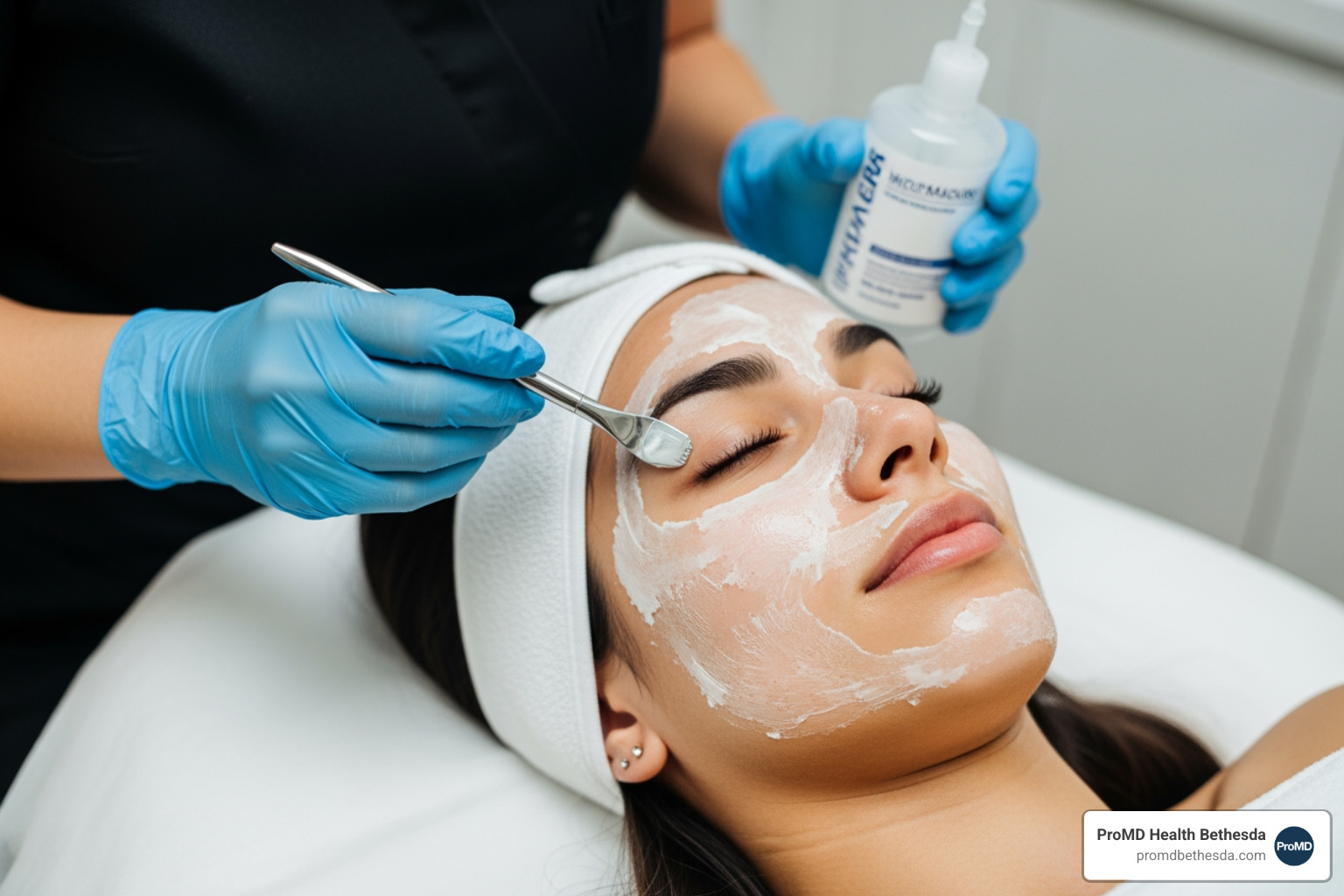
A Deep Dive Into the Magic of Chemical Exfoliation
Understanding the Transformative Power of Skin Resurfacing
How do chemical peels work? Chemical peels work by applying a chemical solution to your skin that causes controlled damage to specific layers. This intentional injury triggers your body’s natural healing response, prompting old, damaged skin to peel away and revealing smoother, more youthful skin underneath.
The Three-Stage Process:
- Controlled Damage – Chemical agents disrupt bonds between dead skin cells in the stratum corneum (your skin’s outermost layer)
- Skin Regeneration – Your body responds by accelerating cellular turnover and shedding damaged layers through desquamation
- Dermal Remodeling – New collagen and elastin production creates firmer, more even-toned skin
If you’re an affluent professional in Bethesda seeking discreet aesthetic treatments, you’ve likely heard about chemical peels. Maybe you’re curious about the science behind them, or you’re wondering if they’re right for your skin type.
The truth is, chemical peels aren’t magic—they’re sophisticated medical treatments that harness your skin’s natural regeneration abilities. When performed correctly, they can address everything from fine lines and sun damage to acne scars and uneven pigmentation.
But here’s what you need to know: not all peels are created equal. The depth of treatment, the chemical agent used, and the expertise of your provider all dramatically impact your results and safety.
Understanding how chemical peels work at a cellular level helps you make informed decisions about your skin. Whether you’re considering a light “lunchtime peel” or exploring deeper resurfacing options, knowing the science behind the treatment removes uncertainty and helps you visualize realistic outcomes.

The Science of Resurfacing: How Do Chemical Peels Work?
To truly grasp the brilliance of this treatment, we need to look under the microscope. Our skin is a complex organ, and the outermost layer, the stratum corneum, is composed of 15 to 30 layers of highly keratinized dead cells. These cells are held together by “glue-like” bonds. Over time, these cells can become dull, pigmented, or damaged by the Maryland sun.
Scientific research on the mechanism of chemical peeling explains that these treatments work through two primary biological pathways: keratolysis and protein denaturation.
Keratolysis involves the disruption of the “velcro” (keratinocyte bonds) that holds dead skin cells together. When these bonds are broken, the skin undergoes desquamation—a fancy medical term for shedding or peeling. On the other hand, stronger acids cause protein denaturation, which is essentially the coagulation of proteins in the skin. This sounds intense, but it’s a highly controlled way to tell the skin, “Time to rebuild!”
As the old layers shed, the magic happens in the deeper layers. The controlled trauma stimulates fibroblasts, the “construction workers” of your skin, to ramp up collagen stimulation and elastin production. This remodeling process is what eventually leads to the reduction of wrinkles and the tightening of the skin.
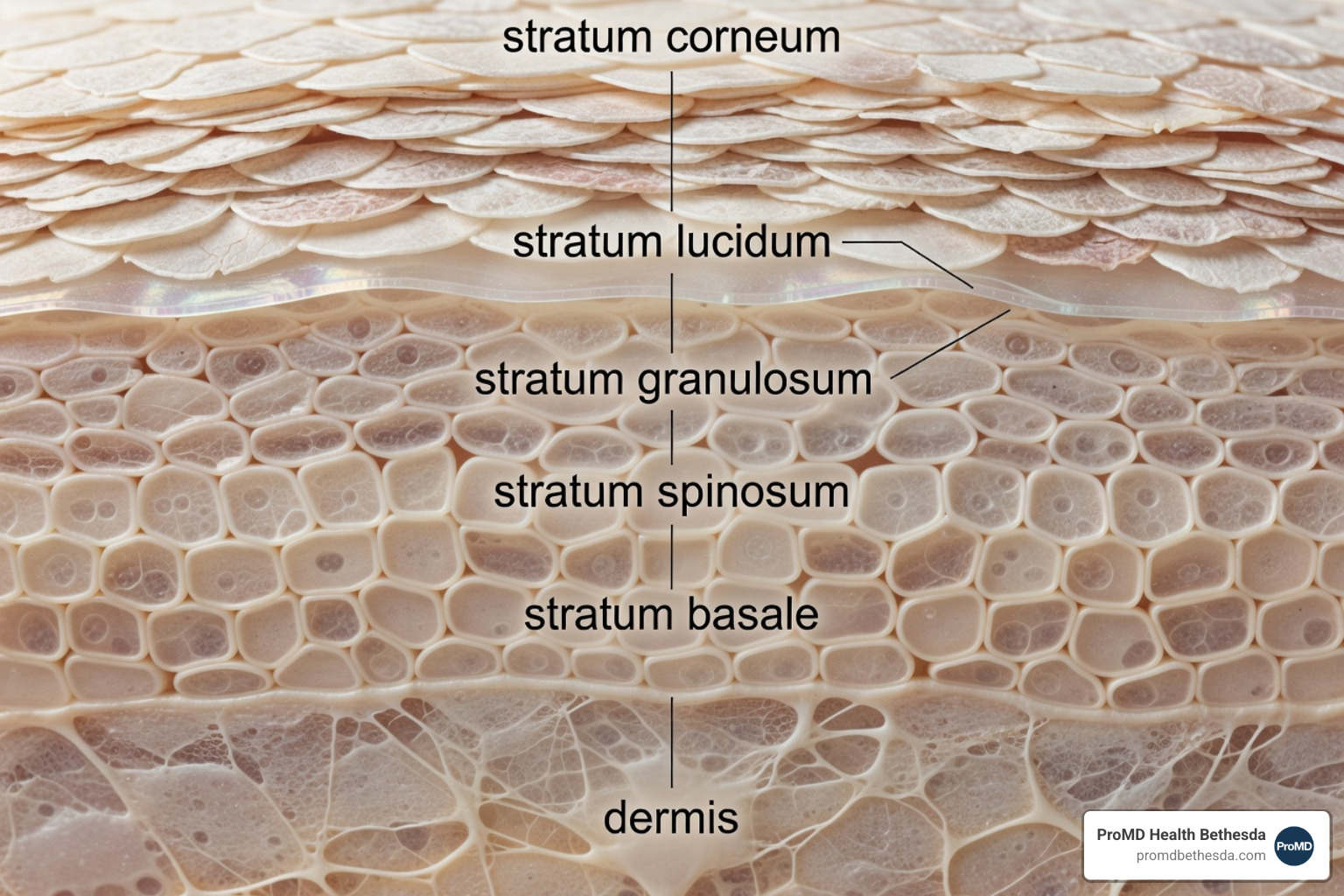
Understanding how chemical peels work at a superficial level
For those of us in the Bethesda and Chevy Chase areas who have a busy schedule, “superficial peels” are often the go-to. Often called “lunchtime peels,” these treatments primarily use Alpha-hydroxy acids (AHAs) like glycolic acid or Beta-hydroxy acids (BHAs) like salicylic acid.
At this level, the goal is epidermal exfoliation. The acid gently lowers the skin’s pH, weakening the bonds of the dead cells in the uppermost layers. This is particularly effective for treating active acne, as salicylic acid is oil-soluble and can dive deep into pores to clear out debris. Because these peels only affect the epidermis, the downtime is minimal, and you can often head right back to your office in Kensington or Rockville with just a slight glow.
If you’re looking to brighten a dull complexion or manage minor breakouts, you can find more info about professional skincare services that specialize in these refreshing treatments.
How do chemical peels work for deep tissue remodeling?
When we move into medium and deep peels, we are no longer just “dusting” the surface; we are renovating the foundation. These peels utilize stronger agents like Trichloroacetic acid (TCA) at higher concentrations or phenol.
Deep peels reach the reticular dermis, the lower layer of your skin. This process involves significant protein coagulation, which often manifests as “frosting” during the procedure. One of the most famous deep formulations is the Baker-Gordon solution, a mixture of 88% phenol, croton oil, and other agents.
Because phenol can be absorbed into the bloodstream, research on phenol peels for actinic keratosis emphasizes that these procedures require professional medical supervision and, in some cases, cardiac monitoring to ensure safety. The result of this deep remodeling is a dramatic reduction in deep-set wrinkles and severe acne scarring—results that can last for years.
Classifying Peels by Depth and Chemical Agent
Choosing the right peel is like choosing the right tool for a home renovation. You wouldn’t use a sledgehammer to hang a picture frame, and you wouldn’t use a light glycolic wash to fix deep-pitted scars.
| Peel Depth | Target Layer | Common Agents | Healing Time |
|---|---|---|---|
| Superficial | Epidermis | Glycolic (30-50%), Salicylic, Jessner | 1–7 Days |
| Medium | Papillary to Upper Reticular Dermis | TCA (35%), Glycolic (70%) | 7–14 Days |
| Deep | Mid-Reticular Dermis | Phenol, TCA (>50%) | 14–21 Days |
The potency of these agents is determined by their concentration and their pKa value. In chemistry, pKa is the pH level at which 50% of the acid is in its free, active state. A lower pKa means a stronger, more “aggressive” peel. We also frequently use the Jessner solution—a classic blend of 14% resorcinol, salicylic acid, and lactic acid—which is fantastic for addressing pigmentation and congestion.
Selecting the Right Agent for Your Skin Type
At ProMD Health Bethesda, we don’t believe in a one-size-fits-all approach. We use the Fitzpatrick skin type scale (which ranges from Type I, very fair, to Type VI, very dark) and the Glogau classification for photoaging to determine the safest and most effective peel for you.
For patients with darker skin tones (Fitzpatrick IV-VI), we must be extremely cautious. These skin types have a higher risk of post-inflammatory hyperpigmentation (PIH). To mitigate this, we often recommend “skin priming” for 2–4 weeks before the procedure. This involves using tretinoin to thin the stratum corneum for even penetration and hydroquinone to “quiet” the pigment-producing cells.
If you’re curious about which treatment matches your unique skin profile, you can explore more info about medical facials and resurfacing options tailored to your needs.
The Step-by-Step Procedure and Healing Timeline
What actually happens when you sit in the chair at our Bethesda clinic? The process is methodical and precise.
First, we perform a thorough degreasing of the skin using acetone or alcohol. This is a critical step; any residual oils on your skin can act as a barrier, preventing the peel from penetrating evenly. Once the skin is prepped, we apply the solution using a specific technique, usually starting from the forehead and moving down to the chin, carefully avoiding the sensitive areas around the eyes and lips.
During the application, we monitor for “frosting.” Frosting occurs when the proteins in your skin denature, creating a white, chalky appearance.
- Level I Frosting: Patchy white spots with some redness (typical of light peels).
- Level II Frosting: A smooth, homogeneous white coating with underlying redness (medium peels).
- Level III Frosting: A thick, plaque-like white appearance with no visible redness (deep peels).
Once the desired depth is reached, some peels (like glycolic acid) require neutralization with sodium bicarbonate to stop the chemical reaction. Others, like TCA, are self-neutralizing.
Post-Peel Recovery and Aftercare
The healing process is where the “new you” is built. Depending on the depth of your peel, your timeline will vary:
- Superficial Peels: You’ll experience 1–7 days of redness and minor flaking. It feels like a mild sunburn.
- Medium-Depth Peels: Expect 7–14 days of healing. Swelling often peaks at 48 hours, and you may see some crusting or brownish discoloration before the skin begins to shed.
- Deep Peels: These require 14–21 days for the initial re-epithelialization. You’ll need to follow a strict regimen of vinegar soaks and thick emollients to keep the skin moist and prevent scarring.
Regardless of the depth, sun avoidance is non-negotiable. Your new skin is incredibly vulnerable to UV damage. We also often prescribe antiviral prophylaxis (medication to prevent cold sore outbreaks) for patients with a history of herpes simplex, as the peel can trigger a flare-up. For a deeper look at recovery, check out these clinical guidelines for chemical peel aftercare.
Safety, Risks, and Professional vs. At-Home Peels
We live in an age of DIY, but when it comes to acid, “doing it yourself” can be dangerous. The FDA alert on at-home chemical peel risks is very clear: unsupervised use of high-concentration peels can lead to severe chemical burns, permanent scarring, and disfiguring changes in skin color.
At ProMD Health Bethesda, your safety is our priority. A professional consultation allows us to review your medical history, including any recent use of isotretinoin (Accutane), which can significantly affect how your skin heals.
Common side effects in a professional setting are usually mild and manageable, such as temporary erythema (redness) or edema (swelling). However, without professional oversight, you risk complications like infection or permanent hyperpigmentation.
Frequently Asked Questions about Chemical Peels
How long do the results of a chemical peel last?
Because chemical peels trigger collagen stimulation, the structural improvements to your skin can be long-lasting. However, your skin continues to age, and the Maryland sun continues to shine! While a deep peel might only be needed once in a lifetime, superficial and medium peels are often done in a series to maintain that “Bethesda glow.” Consistent sun protection is the number one factor in extending the longevity of your results.
Are chemical peels safe for dark skin tones?
Yes, but they require an expert hand. Patients with Fitzpatrick IV-VI skin types should avoid deep phenol peels due to the high risk of permanent pigment loss. However, superficial and carefully managed medium-depth peels can work wonders for treating melasma and acne scarring in darker skin tones, provided the skin is properly primed and the provider is experienced.
How often should I get a chemical peel?
For superficial “refreshing” peels, we typically recommend 2–5 week intervals. Most patients see the best results after a series of 3 to 5 sessions. This cumulative approach allows us to build results steadily without significant downtime. Medium peels are usually spaced several months to a year apart, depending on your skin’s sensitivity and goals.
Conclusion
At ProMD Health Bethesda, we combine the rigorous science of chemical resurfacing with cutting-edge technology. We are proud to offer an AI Simulator, allowing our patients in Bethesda, Chevy Chase, and the surrounding areas to preview their natural-looking results before the treatment even begins.
Whether you want to erase years of sun damage or simply want your skincare products to penetrate more effectively, we are here to guide you. We don’t just “peel” skin; we craft personalized treatment plans that respect your biology and your lifestyle.
Ready to see what’s waiting beneath the surface? Schedule a consultation for professional chemical peels with us today and let’s start your journey to radiant, healthy skin.

