

You may be in a familiar spot right now. You've tried cutting carbs, skipping meals, downloading meal plans, and promising yourself that this Monday will be different. For a week or two, things may feel under control. Then life gets busy, hunger catches up, cravings get louder, and the plan that looked simple on paper starts to feel impossible in real life.
That cycle is exhausting. It also makes many people think they lack willpower, when the underlying problem is often the plan itself. Most diets ask you to follow rules. Nutrition counseling for weight loss helps you build skills.
Instead of asking, "What foods do I need to avoid now?" a good counseling process asks better questions. What patterns are making weight loss harder? When do you overeat? What foods keep you full? What schedule can you maintain? If you're using medical treatment for weight loss, how do you protect muscle, manage side effects, and prepare for life after the medication?
Table of Contents
- Beyond Dieting A Smarter Path to Weight Loss
- What Is Professional Nutrition Counseling
- Your First Steps The Initial Assessment
- The Core Elements of Your Personalized Plan
- Integrating Counseling with Medical Weight Loss Injections
- How to Get Started at ProMD Health Bethesda
- Frequently Asked Questions About Nutrition Counseling
Beyond Dieting A Smarter Path to Weight Loss
A lot of people come in with the same story. They know a lot about dieting. They've read labels, counted calories, sworn off dessert, and restarted more plans than they can remember. What they haven't had is a structured process that fits their body, schedule, stress level, and medical history.

Take a common example. Someone starts with good intentions and cuts out "bad foods." Breakfast becomes coffee. Lunch gets delayed. By late afternoon, they're starving and grabbing whatever is quick. Dinner turns into overeating, followed by guilt. The next day starts with another promise to be stricter. That pattern has very little to do with laziness and a lot to do with physiology, routine, and unsupported habits.
Nutrition counseling changes the conversation.
It focuses on building, not just cutting
A structured plan asks what needs to be added before it asks what needs to be removed. That may mean more protein at breakfast, more consistent meals, better hydration, a plan for restaurant meals, or a strategy for stress eating after work. The point is to make your body and your schedule easier to work with.
It turns confusion into a repeatable routine
Many people are overwhelmed by mixed messages. One plan says low carb. Another says low fat. Another says fasting is the answer. Professional counseling steps back from trends and looks at what you can sustain.
Practical rule: A plan only works if you can follow it on ordinary days, not just highly motivated ones.
That doesn't mean weight loss is easy. It means it becomes clearer. You stop chasing strict short-term fixes and start learning the habits that support steady change. For many people, that's the first time weight management starts to feel less like punishment and more like care.
What Is Professional Nutrition Counseling
Professional nutrition counseling isn't a generic handout and it isn't a list of forbidden foods. It's a structured, individualized process that helps you understand how to eat in a way that supports weight loss, health, and long-term stability.
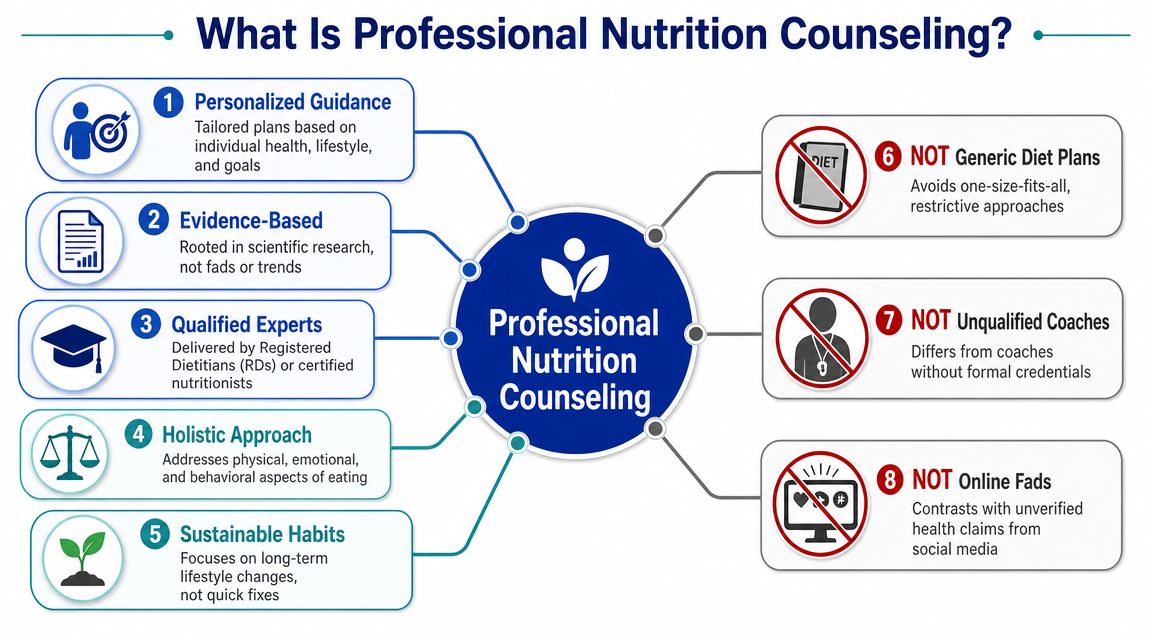
At its core, it has three parts.
| Part | What it means in real life |
|---|---|
| Personalization | Your plan is shaped around your health history, food preferences, schedule, and goals |
| Education | You learn why certain meal patterns, foods, and habits affect hunger, energy, and weight |
| Behavioral support | You work on the routines and decisions that determine what happens outside the exam room |
What it is not
It helps to clear up a few common misunderstandings.
- Not a fad diet: You shouldn't leave with a rigid script that falls apart the first time life gets busy.
- Not vague encouragement: "Eat better" and "watch portions" are often insufficient on their own.
- Not one-size-fits-all coaching: A useful plan has to account for real barriers, including emotional eating, work schedules, travel, and medical treatment.
The reason structure matters is that individualized care performs better than casual advice. A systematic review reported that individualized nutrition therapy from a trained professional led to 2.1 kg more weight loss and a 0.55 kg/m² greater BMI reduction compared with advice from other health professionals, as described in this systematic review on dietitian-delivered nutrition therapy.
Professional counseling works best when it's ongoing, specific, and tailored to the person sitting in front of the clinician.
Why this feels different from dieting
A diet often gives you rules to obey. Counseling gives you a framework to practice. You might work on planning protein earlier in the day, changing late-night eating cues, or creating backup meals for busy evenings. Those steps may sound simple, but they're often what separates a temporary effort from a sustainable one.
A good counseling relationship should also feel collaborative. You shouldn't feel judged for what you're eating now. You should feel understood, informed, and better equipped to make the next decision.
Your First Steps The Initial Assessment
The first visit usually feels less like a test and more like a detailed conversation. The goal isn't to catch you doing something wrong. It's to understand what has been happening, what you've already tried, and what kind of support will be effective.
What your provider is trying to learn
A useful assessment looks beyond the number on the scale. Your provider may ask about:
- Weight history: When weight changes started, what has worked before, and what hasn't lasted
- Daily patterns: Meal timing, skipped meals, snacking, restaurant habits, and weekend differences
- Symptoms and health concerns: Energy levels, sleep, GI symptoms, cravings, and appetite changes
- Lifestyle realities: Work schedule, caregiving demands, travel, cooking time, and stress
This is also where broader health questions matter. In some cases, weight gain doesn't happen in isolation. Sleep disruption, medication effects, and hormonal changes can all affect appetite, energy, and progress. If those concerns sound familiar, this overview of signs of hormonal imbalance in women can help you understand why your plan may need a wider medical lens.
Goal setting goes beyond pounds
Clients often come in with a weight goal, and that's fine. But the best plans also define what success looks like day to day.
That can include:
- less evening overeating
- better control around sweets
- improved energy during the workday
- more confidence eating out
- a consistent breakfast routine
- fewer all-or-nothing swings
Those goals matter because they're measurable in everyday life. They also help you see progress before dramatic scale changes happen.
A strong first visit doesn't demand perfection. It creates a starting point you can build from.
What you can expect to leave with
You may leave with a few focused priorities rather than a long set of rules. For example, your first targets might be to stop skipping lunch, add a protein source to breakfast, and plan one dependable dinner option for busy nights. That's often more effective than trying to overhaul everything at once.
The first assessment should make the process feel less mysterious. Once your provider understands your patterns, the plan becomes much more practical and much more personal.
The Core Elements of Your Personalized Plan
A personalized plan usually looks simple from the outside. Eat more intentionally. Move more consistently. Stay accountable. But underneath those ideas are several pieces working together.
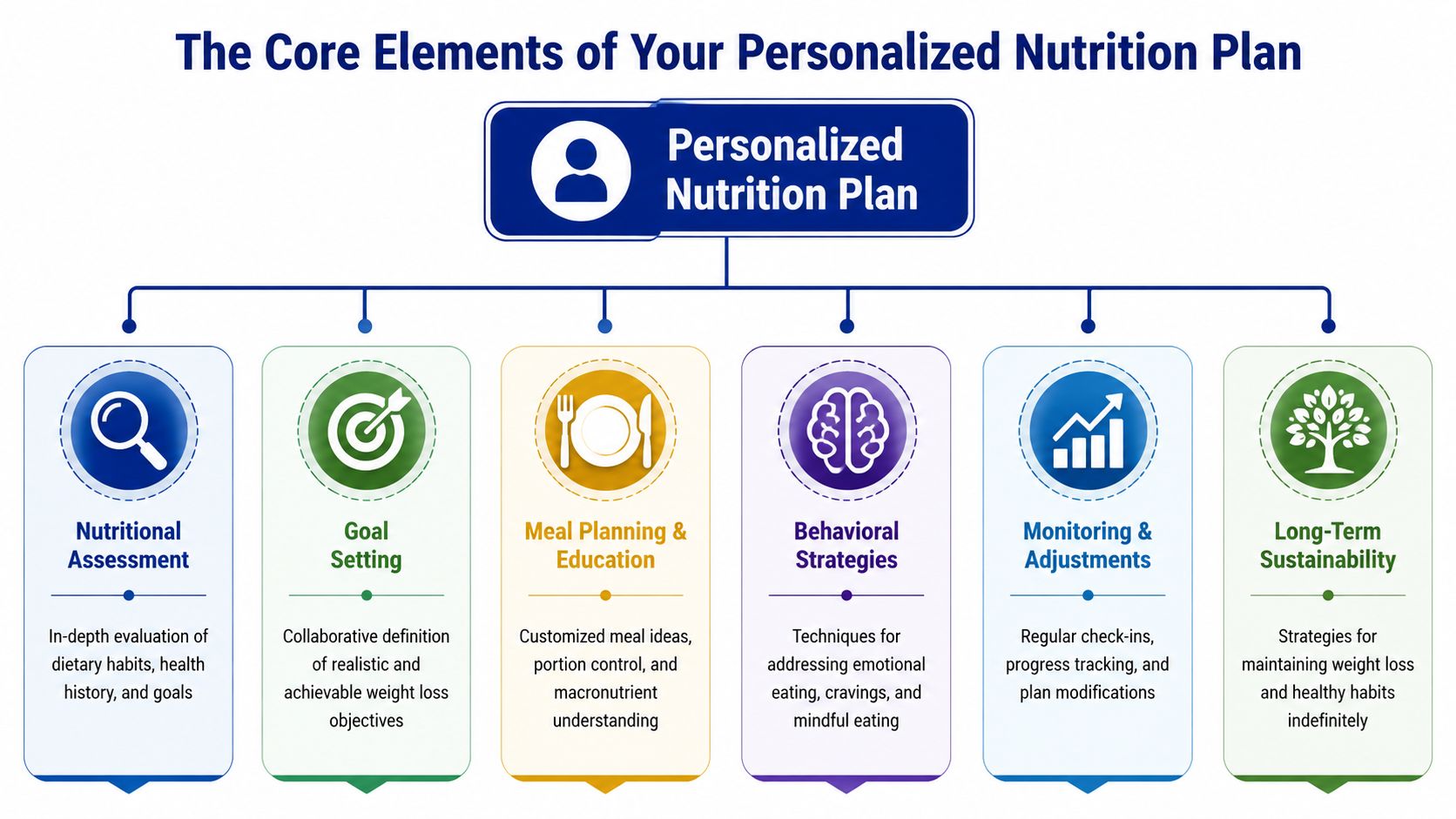
The aim isn't fast chaos. It's steady progress. Major clinical guidelines from the Academy of Nutrition and Dietetics recommend a weight loss target of up to 2 pounds per week, as outlined in this Academy of Nutrition and Dietetics evidence document. That benchmark matters because it shifts the focus away from crash dieting and toward sustainable change.
Behavior change comes first
Food choices don't happen in a vacuum. People eat because they're hungry, but also because they're stressed, tired, bored, celebrating, or trying to get through a hard afternoon.
A counseling plan often looks at patterns such as:
- Stress eating after work
- All-or-nothing thinking after an off-plan meal
- Eating too little early, then overeating later
- Using food as reward, relief, or routine
When you identify the trigger, the strategy gets more specific. Someone who overeats from long gaps between meals needs a different plan from someone who eats mainly in response to anxiety.
Meal structure beats food chaos
Most successful plans create rhythm. Not strict perfection, just enough structure to prevent the common cycle of under-fueling and rebound eating.
A practical day might include:
| Situation | Better structure |
|---|---|
| You skip breakfast and lose control at night | Add a simple morning meal you can tolerate and repeat |
| Lunch gets delayed at work | Keep a backup meal or snack available |
| Dinner portions keep growing | Start with a planned plate instead of grazing while cooking |
Small adjustments can change hunger dramatically. This is often where patients realize that weight management isn't only about eating less. It's also about eating in a way that reduces biological and emotional backlash.
Portions and macros need context
People often get stuck on whether they should eat low carb or low fat. In practice, many need a more basic foundation first.
Protein is important for fullness and for protecting lean mass during weight loss. Carbohydrates can support energy and workout performance. Fat helps with satisfaction and meal enjoyment. The exact balance should fit the person, not the latest trend.
Tracking is a tool not a punishment
Some people benefit from tracking meals, hunger, or patterns for awareness. Others do better with simpler methods, such as photo logging, meal templates, or checking in on a few daily goals.
Tracking works best when it answers a question. Are you skipping meals? Are weekends very different? Are cravings strongest when protein is low? The point is insight, not self-criticism.
The best tracking method is the one you'll still use when life gets busy.
Medical factors matter
Weight loss planning sometimes needs to account for issues beyond food alone. Sleep problems, hormone changes, medication effects, digestive symptoms, and energy levels can all shape what kind of plan is realistic.
That's one reason nutrition counseling for weight loss works better when it's integrated into medical care rather than treated as a standalone diet conversation. If a patient has low energy, appetite changes, or symptoms that suggest a broader wellness concern, the plan should reflect that instead of ignoring it.
Integrating Counseling with Medical Weight Loss Injections
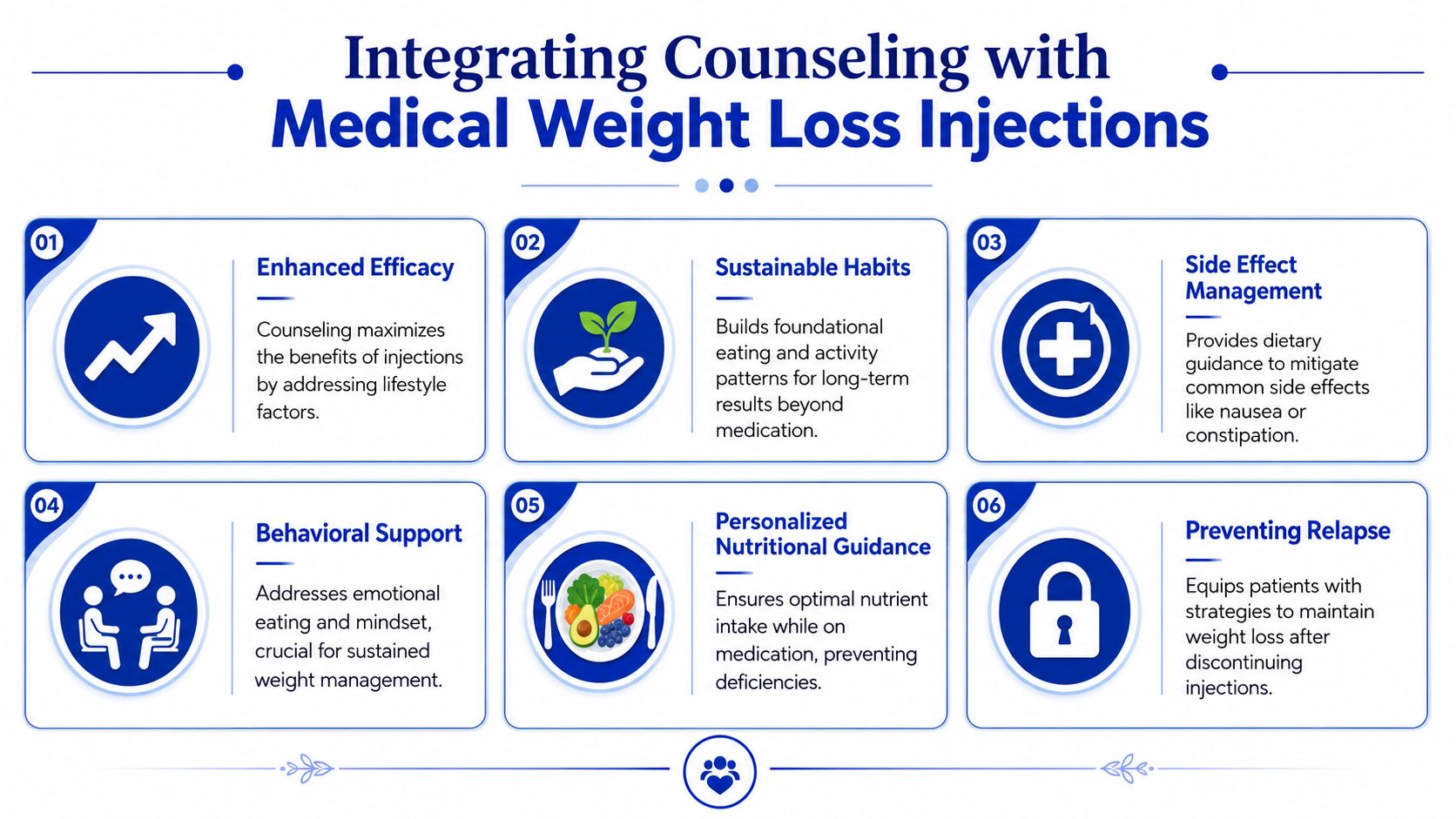
Weight loss injections can be very helpful for some patients. They can reduce appetite and help people break through patterns that have felt stuck for years. But medication doesn't replace nutrition counseling. It changes what nutrition counseling needs to address.
Why medication changes the nutrition conversation
When appetite drops, people often assume less eating automatically means better outcomes. Sometimes it does help with weight loss. But it can also create new problems if food intake becomes too low in quality or too inconsistent.
Recent guidance from the Academy of Nutrition and Dietetics for patients using GLP-1 medications emphasizes nutrition support that includes managing GI side effects, protecting muscle with adequate protein, and preventing micronutrient deficiencies, as described in this guidance on nutritional priorities for GLP-1 therapy.
That matters because people on these medications may deal with nausea, constipation, reduced interest in food, or difficulty eating enough protein-rich meals. They may lose weight while still not meeting their nutritional needs.
What counseling helps you do while on treatment
A structured counseling plan can help with several practical issues at once.
- Managing side effects: Smaller meals, gentler food choices, hydration strategies, and meal timing adjustments can make treatment more tolerable.
- Preserving muscle: Reduced appetite can make protein intake harder. Counseling helps prioritize foods that support lean mass, along with strength training habits.
- Preventing nutrition gaps: If you're eating less overall, food quality matters more, not less.
- Planning for maintenance: If medication is reduced or stopped later, you'll need routines strong enough to support weight maintenance.
For patients exploring medically supervised care, this page on medical weight loss programs gives context for how counseling and treatment can fit together.
Medication may lower appetite. It doesn't automatically teach meal structure, protein prioritization, or long-term maintenance.
Integrated care makes the biggest difference. ProMD Health Bethesda offers Weight Loss Injections as a medically supervised service, and the value of pairing that treatment with nutrition guidance is straightforward. Patients need more than a prescription. They need a plan for what to eat, how to adjust when appetite changes, and how to protect overall health while losing weight.
How to Get Started at ProMD Health Bethesda
Finding the right support matters almost as much as the plan itself. You want someone who treats weight management as a medical and behavioral process, not as a quick cosmetic fix.
What to look for in a qualified provider
A strong provider usually has a few clear habits.
- They personalize care: They ask about your routine, medical history, symptoms, and past attempts before offering advice.
- They explain the why: You should understand why a change is being recommended, not just what to do.
- They think long term: The conversation should include maintenance, follow-up, and how to handle setbacks.
- They can work within a medical plan: If hormones, medications, or weight loss injections are part of the picture, your nutrition strategy should reflect that.
At ProMD Health Bethesda, patients may work with providers such as Mandy Fawcett, PA-C, MSHS, Leigh Mazzei, PA-C, MSHS, and Marissa Phillips as part of a medically guided wellness approach. Depending on the person's needs, care may include Weight Loss Injections and, in some cases, related wellness support such as Hormone Therapy or IV Therapy when clinically appropriate to the services offered by the practice.
A practical next step
The best first move is usually a consultation, not another online meal plan. A consultation gives you a chance to discuss your goals, current challenges, health history, and whether a medically supervised weight loss strategy makes sense for you.
If you're ready to begin, you can get started with a consultation. That first conversation can help turn a frustrating cycle into a plan that's structured, realistic, and easier to maintain.
Frequently Asked Questions About Nutrition Counseling
How is this different from just going on a diet
A diet usually gives you short-term rules. Nutrition counseling helps you build repeatable habits around meal timing, food quality, hunger control, and behavior patterns. It also adapts when life changes. If work gets hectic, travel increases, or you're starting medication, the plan changes with you.
How can I lose weight without feeling hungry or deprived
The goal isn't to white-knuckle your way through the day. Individuals often find greater success when meals are built to improve fullness and consistency. That often means eating regularly, planning satisfying meals, and choosing foods that fit your preferences instead of forcing a plan you dislike.
Research also shows that diet adherence, not a low-carb versus low-fat label, is the main predictor of success, and that many commercial weight-loss plans can create micronutrient deficits, as summarized in this review on dieting, nutrient adequacy, and adherence. In plain terms, the best plan is one you can stay with while still meeting your nutritional needs.
How long does the process take
That depends on your goals, medical history, and the complexity of your routine. It is generally more effective to think in phases instead of deadlines. Early work often focuses on reducing chaos, stabilizing hunger, and building a routine. Later work shifts toward maintaining progress and handling real-life disruptions without sliding back into extremes.
What matters most is consistency. Safe, steady progress is usually more useful than rapid change that doesn't last.
Do I need counseling if I am already using weight loss injections
Yes, many people still benefit. Medication may lower appetite, but it doesn't automatically show you how to structure meals, manage side effects, eat enough protein, or prepare for maintenance later. Counseling helps make the medical treatment safer, more complete, and easier to sustain.
If you're looking for a more thoughtful approach to weight management, ProMD Health Bethesda offers medically supervised care that can include Weight Loss Injections and personalized guidance as part of your treatment plan. A consultation can help you understand your options and build a practical path forward.

